What to Expect on Your Journey with God – Part 3
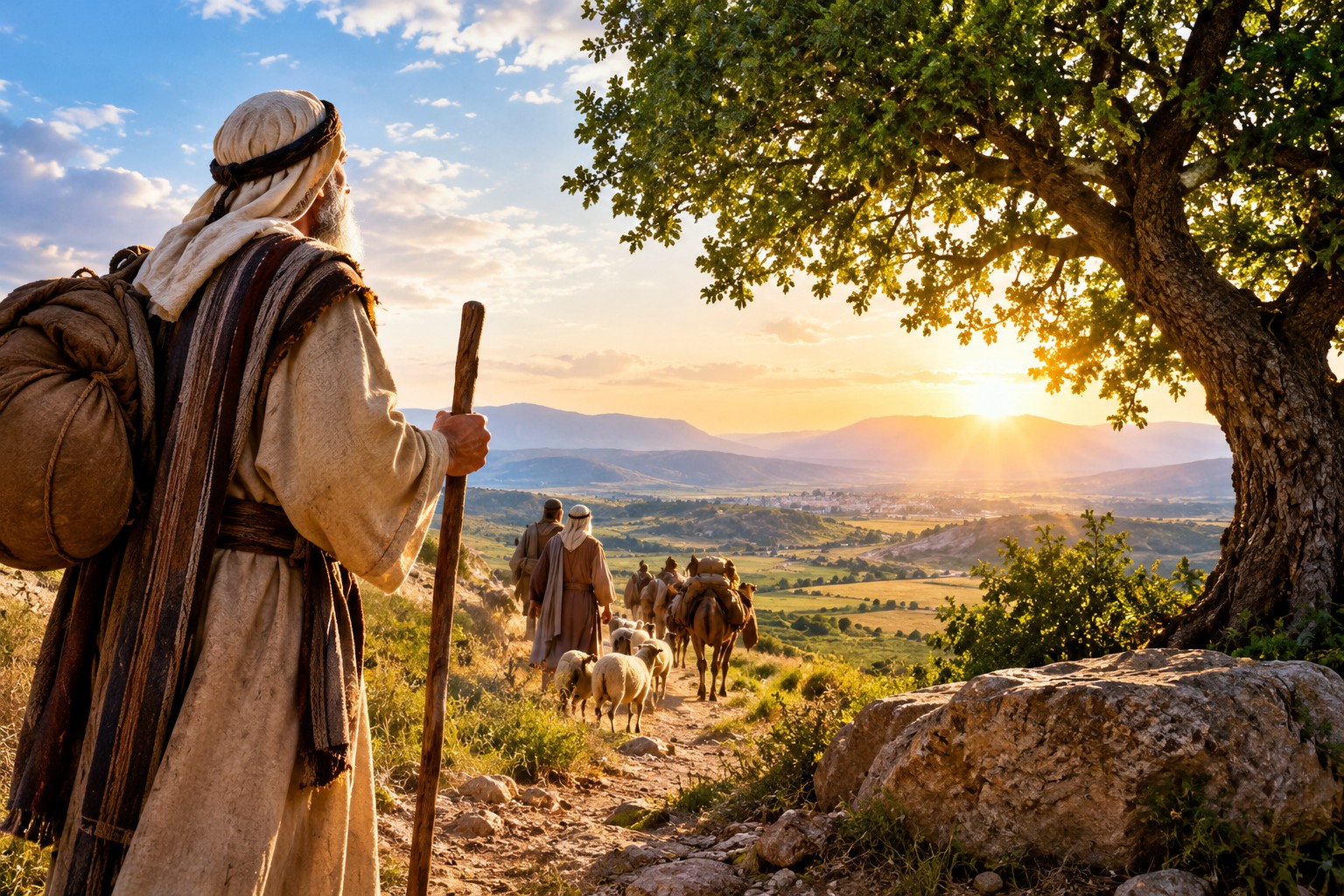
When Abram responded to the call of God, he didn’t do so half-heartedly. He packed up everything he had and left the place where he and his family had lived for years and set out on a journey, not knowing what was ahead of him. He never looked back. He never returned to the life he had known before.
This is what Jesus requires of all of us.
“But Jesus said to him, ‘No one who puts his hand to the plow and looks back [to the things left behind] is fit for the kingdom of God.’”—Luke 9:62 (AMP)
Family Responsibilities
When Abram left, his nephew Lot went with him.
“So Abram departed [in faithful obedience] as the Lord had directed him; and Lot [his nephew] left with him.”—Genesis 12:4 (AMP)
When Lot’s father died, Abram filled the role of a father in caring for his nephew. This is a lesson for us. God may call us to leave our old lifestyles, but we do not abandon our responsibilities, especially responsibilities to our family. The Bible is very clear about this.
“If anyone does not take care of his own relatives, especially his immediate family, he has denied the faith and is worse than an unbeliever.”—1 Timothy 5:8 (ISV)
It’s Never Too Late
“Abram was seventy-five years old when he left Haran.”—Genesis 12:4 (AMP)
No matter where you are in life, the best part of your life can still be ahead of you! Abram was seventy-five years old when he started his journey with God, and yet the best years of his life were still ahead of him!
No matter how badly you have messed up your life, God can turn things around for you! Moses had killed a man and had to flee for his life. He ended up herding sheep in the desert until he was 80 years old, but that was where his life completely turned around when he had an encounter with God! Moses had been a forgotten man who had seen all of his dreams crushed, but God resurrected his life! It was not until after Moses was an old man that he finally entered into the true purpose of his life.
As long as you are still breathing, it’s not too late for you! You can be forgiven and step into God’s perfect will for your life at any time. The thief who died on the cross beside Jesus found forgiveness and salvation with his dying breaths. Jesus assured him that he would be in Heaven.
“Jesus replied, ‘I assure you that today you will be with me in paradise.’”—Luke 23:43 (CEB)
But don’t delay! Yes, the thief was saved, but because He had wasted his life with poor choices, he entered Heaven with no rewards.
There are some believers in Heaven who are considered among the greatest, and others who are considered the least. Jesus spoke about this more than once. Your position of authority and responsibility in Heaven, along with your eternal rewards, are determined by how you lived your life.
“If the work that anyone has built on the foundation survives, he will receive a reward. If anyone’s work is burned up, he will suffer loss, though he himself will be saved, but only as through fire.”—1 Corinthians 3:14-15 (ESV)
A Journey of Learning
Abram’s journey took him to the land of Canaan where the nation of Israel is located today.
“Abram passed through the land as far as the site of Shechem, to the [great] terebinth (oak) tree of Moreh.”—Genesis 12:6 (AMP)
Everything in the Bible has meaning, even the names of places and people.
The first significant landmark in Abram’s journey was the great oak tree of Moreh at Shechem.
In the Bible, trees often represent established leaders. In Abram’s case, God was leading him, and it will be the same for you. If you have made a commitment to follow God, then you can say with David, “The Lord is my Shepherd” (Psalm 23:1).
This particular tree was the great oak tree of Moreh. “Moreh” means “teacher.” When you follow Jesus, your journey will be a journey of learning … and there will be a lot to learn!
Abarim Publications gives us some insight into this part of Abram’s journey in life:
“The wording of these statements and the activities they describe strongly suggest that Abraham was not simply wandering around, but was rather on a specific course along a network of centers of learning.”
But what Abram experienced was not unusual. Jesus invites all of us to join Him on a journey of learning.
“Take my yoke upon you, and learn from me, for I am gentle and lowly in heart, and you will find rest for your souls.”—Matthew 11:29 (ESV)
Jesus describes our learning journey as taking on His yoke. A yoke is worn around the neck and it rests on the shoulders. And that is exactly what the name “Shechem” means.
The Bible tells us that Abram passed through the land until he came to Shechem (“shoulder”) and the oak tree of Moreh (“teacher”), and the Bible seems to speak of this as a sacred place.
Symbolically, this represents the sacred point in your life when you truly become a disciple of Jesus Christ, taking his yoke upon your shoulders and learning from the greatest Teacher of all!
Trust and Obey
One of the things that Abram seems to already have learned is to trust God even if it does not make sense to his natural mind. This is an important lesson for all of us.
Logically, it didn’t really make sense for Abram to leave his family and the life he had established in his hometown. It didn’t make logical sense for him to uproot his family and take off to an unknown destination, not knowing what awaited him there. But that is where he ultimately found his destiny! It was there that he found the reason for his existence, the purpose of his life and the fulfilment of his heart’s desires!
This word Moreh may specifically be speaking of a kind of teacher “who is a person who teaches children who can’t think for themselves yet.” (Abarim Publications)
That is exactly what God requires of us, as we are instructed in Proverbs 3:5:
“Trust in the Lord with all your heart, and do not lean on your own understanding.” (ESV)
There may be times when God requires something that makes no sense to us. We have to learn to trust Him and obey Him, even when we do not understand. His ways are always best, but they may leave us struggling to understand at times, as He tells us in Isaiah 55:9:
“Just as the heavens are higher than the earth, so my ways are higher than your ways, and my thoughts are higher than your thoughts.” (ERV)
God has got it all figured out. He knew our futures before we were born. We have to learn to trust God in all things, even if it doesn’t always make sense to our natural minds.
“Even the foolishness of God is wiser than men. Even the weakness of God is stronger than men.”—1 Corinthians 1:25 (ICB)
“I say this because the wisdom of this world is foolishness to God. As the Scriptures say, ‘He catches those who think they are wise in their own clever traps.’”—1 Corinthians 3:19 (ERV)
Reference: Abarim Publications. (n.d.). The Amazing Name Moreh: Meaning and Etymology.
Next: The Big Picture of God’s Plan for You
Back: Walking by Faith
Additional Resources
- Study Guide: A Journey of Learning (PDF)
- It Is Never Too Late: A Comparative Study of Spiritual Purpose Across Life Stages (PDF)
- Strategic Program Proposal: The Shechem-Moreh Lifelong Discipleship Framework (PDF)
- The Architecture of Faithfulness: Salvation, Eternal Rewards, and the Dynamics of Discipleship (PDF)
- Understanding the Mind of God: Natural Understanding vs. Divine Wisdom (PDF)