Jesus concluded His earthly ministry by commanding His disciples to reach out to people beyond the walls of the Church and to make disciples of all nations.
“Go therefore and make disciples of all the nations, baptizing them in the name of the Father and of the Son and of the Holy Spirit”—Matthew 28:19 (NKJV)
After a lifetime of attending church in America, you may learn many things. But sadly, unless your church is a rare exception, you will most likely NOT learn how to effectively reach people for Christ or how to make disciples.
Years ago, a very prestigious Christian school of missions sent their evangelism students to observe us because the director heard about our outreach efforts at a festival in Dallas, Texas.
It was obvious from the beginning that these students, who were pursuing genuine callings to missions and evangelism had no clue about how to even begin to effectively reach people for Christ. In the short time that we had with them, all we could really do for them was to try to explain very general guidelines, and then to model for them what the very basics of effective evangelism look like.
The real tragedy is that many of them had probably grown up in American churches. Now they had reached adulthood and were preparing to go into the ministry without ever learning how to make disciples or how to reach people for Christ outside the walls of their churches.
From what I have seen, this is typical for adults who have spent their lives in Christian churches in America.
Let’s make this personal.
Paul commissioned Timothy by telling him, “You have heard me teach things that have been confirmed by many reliable witnesses. Now teach these truths to other trustworthy people who will be able to pass them on to others.” (2 Timothy 2:2 NLT)
If your pastor brought a new church member to you and assigned you to disciple this person, how would you react? Would you be excited about starting this new relationship ASAP, or would you just stare cluelessly at your pastor like a deer caught in the headlights, not having any idea what he is asking you to do, or how to even begin?
Or what about this?
If your pastor expressed a desire to start a new outreach ministry to people in the neighborhood, and he asked you to lead this new outreach ministry, how would you react? Would you excitedly take up the challenge, confident that you could effectively reach people in your community with the love and power of Jesus? Or would you object in horror, arguing that evangelism is not your “calling,” and then retreat back into the safety and comfort of your church meetings?
In spirit-filled churches, we celebrate the baptism of the Holy Spirit as we gather together in meetings with fellow believers, prophesy over each other, and encourage each other with Spirit-inspired blessings.
But there is a problem… . That’s not the primary reason that the Holy Spirit was given to us.
Look at Jesus’ original instructions to his disciples in Acts 1:8:
“but you will receive power when the Holy Spirit has come upon you; and you shall be My witnesses both in Jerusalem and in all Judea, and Samaria, and as far as the remotest part of the earth.” (NASB)
Does it sound like the Holy Spirit was given to us primarily for the purpose of blessing each other in our local church meetings?
It seems to be exactly the opposite. It seems that the Holy Spirit was given to enable us to be effective as we go outside of the church walls to reach others with the love and power of Jesus Christ, making disciples as we go.
This is not optional. When Jesus gives a command, He expects obedience. He expects results.
It seems that we have become just like the religious leaders of Jesus’ time. We received the commandments of God, but instead of committing ourselves to obey these commands faithfully, we have substituted our own traditions for the commands of Christ. Our own traditions are more comfortable for us. They seem better suited to our lifestyles.
Jesus’ rebuke may be just as applicable for us today as it was for the religious leaders of His day:
He replied, “Rightly did Isaiah prophesy about you hypocrites (play-actors, pretenders), as it is written [in Scripture],
‘These people honor Me with their lips, But their heart is far from Me.
‘They worship Me in vain [their worship is meaningless and worthless, a pretense], Teaching the precepts of men as doctrines [giving their traditions equal weight with the Scriptures].’
You disregard and neglect the commandment of God, and cling [faithfully] to the tradition of men.”
He was also saying to them, “You are experts at setting aside and nullifying the commandment of God in order to keep your [man-made] tradition and regulations. **… **so you nullify the [authority of the] word of God [acting as if it did not apply] because of your tradition which you have handed down [through the elders]. And you do many things such as that.”—Mark 7:6-13 (AMP)
When Jesus gives commands to each of us, He expects us to fulfill the responsibilities of those commands. Jesus has paid a very high price for us. He expects a good return on His investment. We see this in the parable of the talents in Matthew 25. We see this also in the parable of the sower in Matthew 13, Mark 4, and Luke 8. Jesus expects good fruit in return for the seeds that He has sown into our lives.
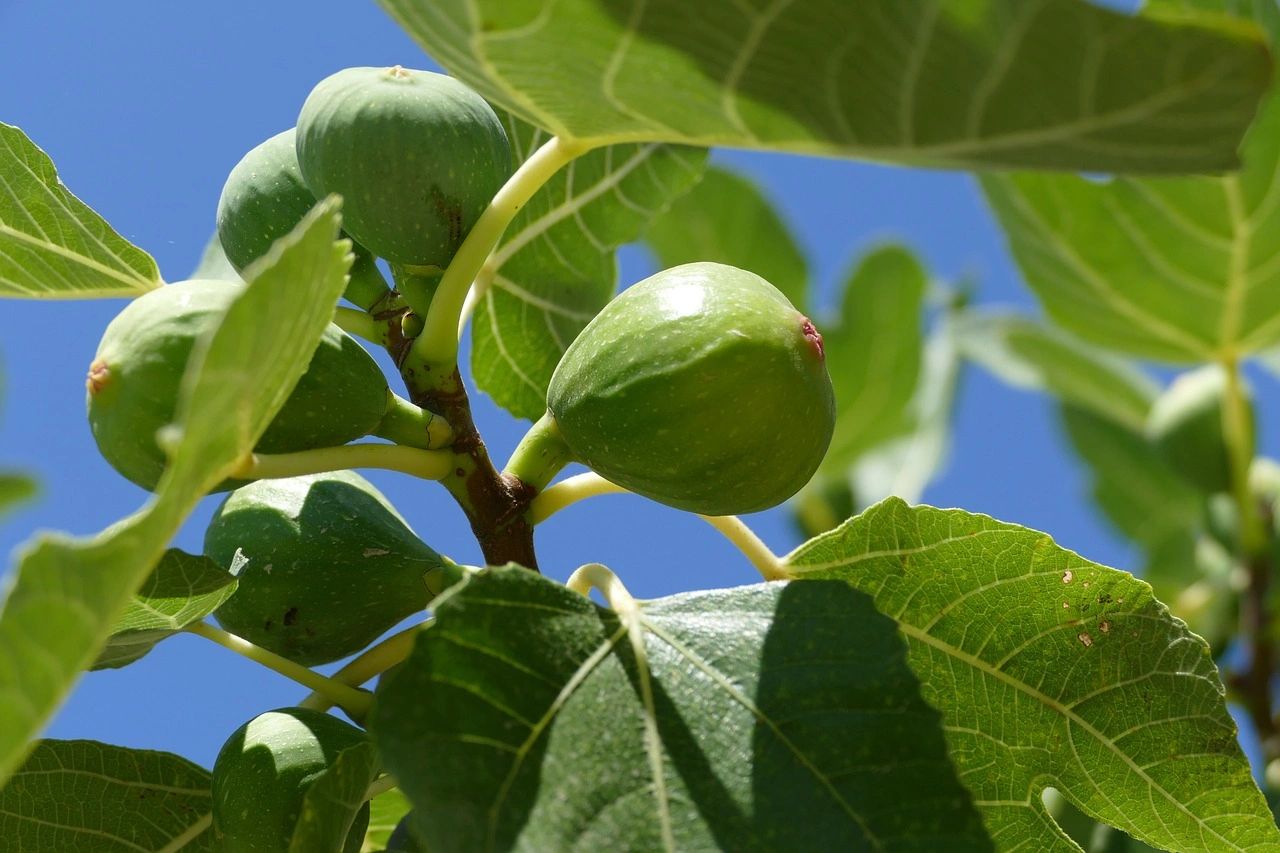
Do you remember when Jesus cursed the fig tree?
“He saw a fig tree beside the road and went to get a fig from it. But there were no figs on the tree. There were only leaves. So Jesus said to the tree, ‘You will never again produce fruit!’ The tree immediately dried up and died.
“When the followers saw this, they were very surprised. They asked, ‘How did the fig tree dry up and die so quickly?’”—Matthew 21:19-20 (ERV)
Why did He do that? Why did Jesus curse the fig tree?
When Jesus came to the fig tree, He was looking for fruit. Instead, He found only leaves.
Why was Jesus so displeased to find only leaves on this tree?
Leaves provide a way for the plant to feed itself, through photosynthesis.
Jesus is looking for fruit in your life and in my life. If He finds us completely focused inward, feeding ourselves, but not producing any fruit, He cannot entrust us with His highest calling. That alone may be grounds for demotion … or worse, as we see with the foolish servant who is cast into outer darkness in the parable of the talents. Jesus may have no choice but to move on to find faithful disciples He can trust with His highest responsibilities.
The same is true for churches and Christian ministries as well as individual believers.
Years ago, I was actively involved as a member of an exciting, healthy church that was growing in many areas and had great potential for future growth. I was involved in outreach ministry as part of this church.
Over time, people with real needs responded to our outreach ministry. As the ministry continued, more people responded regularly to our outreach efforts. I eventually saw a real need for an ongoing, organized discipleship strategy that could take these needy people and help guide them on their life journeys. I felt sure that if we could provide a caring, nurturing environment for discipleship, the people would respond.
I approached the heads of our church men’s ministry and women’s ministry separately, telling them that if they could provide discipleship for men and women new to the church, then I felt sure that I could send them a steady flow of new disciples.
Both ministry leaders told me the same thing.
Their ministry programs were growing but were not yet completely organized and stable. At this time, they didn’t want a lot of new people coming in until they had time to establish their ministries better, and get these programs organized the way they wanted them.
Both the men’s ministry leader and the women’s ministry leader told me that they did not want new disciples coming into their groups at this time.
I was dumbfounded. Shocked. New disciples were turned away in order to protect the church programs!
Have we forgotten what our purpose is?
At that time, this church was growing in exciting ways. Five years later, that church no longer existed. No longer able to pay its bills, the church closed its doors and disbanded.
“When the followers saw this, they were very surprised. They asked, ‘How did the fig tree dry up and die so quickly?’”—Matthew 21:20 (ERV)
I have watched other churches wither like the fig tree before and since my experience with this church. In fact, at one church I attended, I requested a meeting with one of the church elders. As we met over lunch, I told him that I had watched at least three other churches wither and die like the fig tree that Jesus cursed. Each of these churches had seen meetings packed with people, showing great potential for future growth, but when they chose to prioritize church programs over outreach and discipleship, each church eventually withered, closed its doors, and disbanded.
I told this elder that I was seeing the same signs in this church that I had seen in the other churches.
That elder took what I said to heart, but he was unable to persuade the leadership to make the priority shifts that were needed. Eventually, I was surprised when that elder left the church. Today, that church is only a shell of what it used to be, with only a small fraction of its former members still attending.
Jesus gives time for us to prioritize outreach and discipleship, as He commanded us, but His patience eventually runs out.
Then He began telling them this parable: “A certain man had a fig tree that had been planted in his vineyard; and he came looking for fruit on it, but did not find any; so he said to the vineyard-keeper, ‘For three years I have come looking for fruit on this fig tree and have found none. Cut it down! Why does it even use up the ground [depleting the soil and blocking the sunlight]?’ But he replied to him, ‘Let it alone, sir, [just] one more year until I dig around it and put in fertilizer; and if it bears fruit after this, fine; but if not, cut it down.’”—Luke 13:6-9 (AMP)
“Whoever still won’t obey after being warned many times will suddenly be destroyed. Nothing can save them.”—Proverbs 29:1 (NIRV)
This applies to churches and individuals alike. Jesus expects fruit from us. He expects a good return on His investment. After all, He bought and paid for us with His life.
“Do you not know that your body is a temple of the Holy Spirit who is within you, whom you have [received as a gift] from God, and that **you are not your own [property]? You were bought with a price [you were actually purchased with the precious blood of Jesus and made His own]. **So then, honor and glorify God with your body.”—1 Corinthians 6:19-20 (AMP)
It may be time for a self-check—a self-evaluation—to determine whether or not our lives are bearing fruit as God expects. It is much better for us to judge ourselves and make needed corrections before God does it for us.
“But if we evaluated and judged ourselves honestly [recognizing our shortcomings and correcting our behavior], we would not be judged.”—1Corinthians 11:31 (AMP)
“I am the True Vine, and My Father is the Vinedresser. Any branch in Me that does not bear fruit [that stops bearing] He cuts away (trims off, takes away); and He cleanses and repeatedly prunes every branch that continues to bear fruit, to make it bear more and richer and more excellent fruit.”—John 15:1-2 (AMPC)
“I am the Vine; you are the branches. The one who remains in Me and I in him bears much fruit, for [otherwise] apart from Me [that is, cut off from vital union with Me] you can do nothing. If anyone does not remain in Me, he is thrown out like a [broken off] branch, and withers and dies; and they gather such branches and throw them into the fire, and they are burned.”—John 15:5-6 (AMP)
Are you willing to rise above the shortcomings of the modern-day Church and commit yourself to obeying the commands of Jesus and living a life that produces fruit that pleases Him?
“You did not choose me, but I chose you and appointed you so that you might go and bear fruit—fruit that will last—and so that whatever you ask in my name the Father will give you.”—John 15:16 (NIV)
“This is how my Father is glorified, when you produce a lot of fruit and so prove to be my disciples.”—John 15:8 (ISV)