A Deeper Dive Into the Book of Revelation - Part 12
In Matthew 13, Jesus gave us a profound prophecy in seven parables that described the Church Age from its beginning during His own ministry to its culmination in the Harvest at the end of this age.
In His parable of the sower, Jesus defined four groups of people: one group of unbelievers and three distinct groups of believers. Each of these groups is still here in the world today, and these groups will have very different experiences at the time of the Great Harvest at the end of this age.
In the parable of the wheat and the tares (weeds), Jesus introduces *another *group that was produced by seeds from another sower.
“The kingdom from heaven may be compared to a man who sowed good seed in his field. While people were sleeping, his enemy came and sowed weeds among the wheat and went away. When the crop came up and bore grain, the weeds appeared, too.
“The owner’s servants came and asked him, ‘Master, you sowed good seed in your field, didn’t you? Then where did these weeds come from?’
“He told them, ‘An enemy did this!’
“The servants asked him, ‘Do you want us to go and pull them out?’
“He said, ‘No! If you pull out the weeds, you might pull out the wheat with them. Let both grow together until the harvest, and at harvest time I will tell the reapers, “Gather the weeds first and tie them in bundles for burning, but bring the wheat into my barn.”’”—Matthew 13:24-30 (ISV)
Jesus never explained this parable to the large crowds that were listening to Him. After sharing two more parables with them, Jesus “left the crowds and went into the house” (Matthew 13:36 ISV).
Later, Jesus gave a clear explanation of this parable to those disciples who were closest to Him, but it was only after they sought Him and asked for an explanation.
“His disciples came to him and asked, ‘Explain to us the parable about the weeds in the field.’”—Matthew 13:36 (ISV)
This should be an important lesson for us. If we don’t care enough to seek God for answers, we shouldn’t expect God to reveal anything to us. But if we seek Him with our whole hearts, He will be more than willing to answer our questions and reveal His hidden wisdom to us.
“If any of you lacks wisdom, you should ask God, who gives generously to all without finding fault, and it will be given to you.”—James 1:5 (NIV)
“For everyone who asks and keeps on asking receives; and he who seeks and keeps on seeking finds; and to him who knocks and keeps on knocking, the door shall be opened.”—Luke 11:10 (AMPC)
“Call to me and I will answer and reveal to you wondrous secrets that you haven’t known.”—Jeremiah 33:3 (CEB)
This is the interpretation of the parable that Jesus gave to His disciples:
“And He said, “The one who sows the good seed is the Son of Man, and the field is the world; and as for the good seed, these are the sons of the kingdom; and the weeds are the sons of the evil one; and the enemy who sowed them is the devil, and the harvest is the end of the age; and the reapers are angels.
“So just as the weeds are gathered up and burned with fire, so shall it be at the end of the age. The Son of Man will send forth His angels, and they will gather out of His kingdom all stumbling blocks, and those who commit lawlessness, and they will throw them into the furnace of fire; in that place there will be weeping and gnashing of teeth. Then the righteous will shine forth like the sun in the kingdom of their Father. The one who has ears, let him hear.”—Matthew 13:37-43 (NASB)
Jesus was very precise in His interpretation. Since Jesus gave us the interpretation of this parable, we are not allowed to offer any different interpretations. His interpretation is the only correct interpretation.
“First of all, you must understand this: No prophecy in Scripture is a matter of one’s own interpretation”—2 Peter 1:20 (ISV)
Please take note of what each of these seven elements represents, according to Jesus’ interpretation:
-
The sower is the Son of Man (Jesus).
-
The field is the world. (The field is not limited to the Church.)
-
The good seed are the children of the Kingdom of Heaven.
-
The weeds (or tares) are the children of the evil one.
-
The enemy who sowed the weeds (tares) is the devil.
-
The harvest is the end of the age.
-
The reapers are the angels.
What are the “Weeds”?
These weeds (or tares, depending on the translation you are using) are not just people who do not believe in Jesus. We saw a group of people in Jesus’ parable of the sower who did not believe God’s message. They were people who initially had a chance to become believers, but the birds (evil spirits) came and stole the good seeds of God’s message from their hearts.
The weeds in this parable represent a different group of people. Like the believers in the parable of the sower, these weeds are the product of seeds sown in their hearts, but these seeds are of the devil, and so, instead of being children of God, they literally are children of the devil. That is no exaggeration. Jesus told us so.
There are people living among us now who are truly the devil’s children, as much as we would like to believe that it is not true. That is the absolute truth because that is what Jesus clearly told us in this interpretation.
On the one hand, there are unbelievers, like those in the parable of the sower, who simply have not received God’s message of good news in their hearts; and then there are people who have embraced the seed of the devil’s message that has been sown in their hearts and have become the devil’s own children. These are two very different groups of people.
Stumbling Blocks and Lawless Ones
In His interpretation of this parable, Jesus gave us some clues about the characteristics of these tares.
“So just as the weeds are gathered up and burned with fire, so shall it be at the end of the age. The Son of Man will send forth His angels, and they will gather out of His kingdom all stumbling blocks, and those who commit lawlessness, and they will throw them into the furnace of fire; in that place there will be weeping and gnashing of teeth.”—Matthew 13:40-42 (NASB)
Thayer’s Greek Lexicon defines these “stumbling blocks” as “a trap, snare; any impediment placed in the way and causing one to stumble or fall” or “any person or thing by which one is (‘entrapped’) drawn into error or sin.”
Jesus warned us about some of these people in His letter to the church in Pergamum:
“But I have a few things against you, because you have there some [among you] who are holding to the [corrupt] teaching of Balaam, who taught Balak to put a stumbling block before the sons of Israel, [enticing them] to eat things that had been sacrificed to idols and to commit [acts of sexual] immorality.”—Revelation 2:14 (AMP)
Paul also warned us about these stumbling blocks:
“Now I urge you, brothers, to watch out for those who create divisions and sinful enticements that oppose the teaching you have learned. Stay away from them”—Romans 16:17 (ISV)
Jesus called out these lawless ones who opposed His ministry, clearly discerning the tares among the wheat:
“Woe to you, scribes and Pharisees, pretenders (hypocrites)! For you are like tombs that have been whitewashed, which look beautiful on the outside but inside are full of dead men’s bones and everything impure. Just so, you also outwardly seem to people to be just and upright but inside you are full of pretense and lawlessness and iniquity.”—Matthew 23:27-28 (AMPC)
We may be surprised one day to find out that even some of the exalted Christian leaders who gained large followings with impressive ministries were not God’s children at all, but were tares among the wheat.
“Not everyone who says to Me, ‘Lord, Lord,’ will enter the kingdom of heaven, but the one who does the will of My Father who is in heaven will enter. Many will say to Me on that day, ‘Lord, Lord, did we not prophesy in Your name, and in Your name cast out demons, and in Your name perform many miracles?’ And then I will declare to them, ‘I never knew you; leave Me, you who practice lawlessness.’”—Matthew 7:21-23 (NASB)
“Woe to you, teachers of the law and Pharisees, you hypocrites! You travel over land and sea to win a single convert, and when you have succeeded, you make them twice as much a child of hell as you are.”—Matthew 23:15 NIV
Wheat’s Evil Twin
Many scholars believe that the weeds Jesus speaks of here are a kind of darnel. It is a plant that resembles wheat, but the grains are black. The word “darnel” is even used in some Bible translations of this parable.
The secular website, Atlas Obscura, published an article describing this plant. The title of the article caught my attention:
“Wheat’s Evil Twin Has Been Intoxicating Humans For Centuries”
Reading the description of this plant is like reading a description of these people that Jesus refers to as the “children of the evil one.”
“For many centuries, perhaps for as long as humans have cultivated cereal grains, wheat’s evil twin has insinuated itself into our crops. In a big enough dose, this grass, darnel, can kill a person, and farmers would have to take care to separate it out from their true harvest …” (Laskow)
Darnel is poisonous to humans. Eating its seeds causes a person to become dizzy and nauseous, and it confuses the person’s equilibrium, vision, and speech.
Darnel looks very much like wheat. It is classified as a “mimic weed.” In other words, it is a hypocrite masquerading as something that it is not. Its survival depends on insidious deception. It intermingles with true wheat so that harvesters will gather it along with the wheat. In that way, its seeds can survive to be replanted in the next season alongside the true wheat.
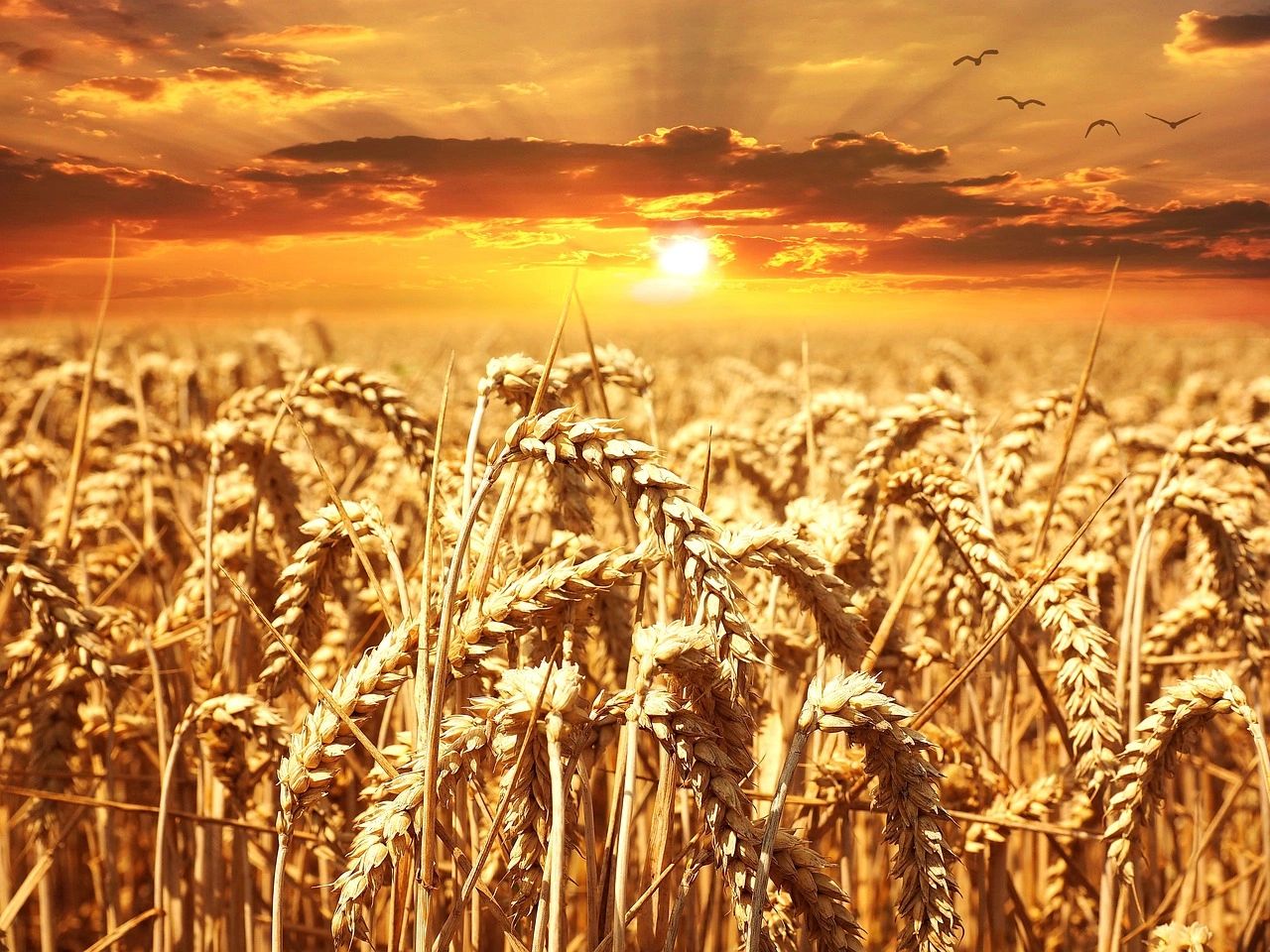
When wheat is fully ripe, it bows under the weight of the the grain, as if it is bowing in humility to honor its Creator. Tares do no such thing. Since they lack the true fruit of the wheat, they seem to stand tall and straight, as if they are defiantly refusing to bow to the God who created them.
The Great Separation
This parable of the Wheat and the Weeds gives us insight into what will signal the beginning of the end-time harvest. We will see this again in the seventh parable of Matthew 13 about the net filled with fish. This parable of the wheat and the weeds primarily describes a great separation that will take place as the great harvest begins at the end of this age. This great separation of the weeds from the wheat will be the first stage of the great end-time harvest.
This parable of the Wheat and the Weeds describes how the children of God and the children of the devil will be *separated *in preparation for the next stage of their respective harvests. There will be a harvest of each group. Those two harvests are described in Revelation 14:14-20.
It is interesting to see that, at harvest time, it is not the wheat that is gathered first, but the weeds. The weeds are gathered first, separated from the true wheat, and then bound in preparation for their burning.
“Let the weeds and the wheat grow together until the harvest time. At the harvest time I will tell the workers this: First, gather the weeds and tie them together to be burned. Then gather the wheat and bring it to my barn.”—Matthew 13:30 (ERV)
“So just as the weeds are gathered up and burned with fire, so shall it be at the end of the age. The Son of Man will send forth His angels, and they will gather out of His kingdom all stumbling blocks, and those who commit lawlessness, and they will throw them into the furnace of fire; in that place there will be weeping and gnashing of teeth. Then the righteous will shine forth like the sun in the kingdom of their Father. The one who has ears, let him hear.”—Matthew 13:40-43 (NASB)
As Jesus describes it, this is the order in which the great separation will take place as the harvest begins:
-
The weeds (the children of the devil) will be gathered and bound by the angels in preparation for burning. Their burning will happen later in Revelation 20:15 and 21:8.
-
After the tares are removed, the true wheat (the children of God) will be gathered by the angels to be brought into the barn.
It is important to note that the weeds are not taken out of the world, but out of the Kingdom of God. Until now, these weeds have been allowed to intermingle with the children of God as if they belonged with us. But at the end of this age, there will be a great separation. These weeds will be removed from among us. How this will happen is a great mystery, but somehow, the angels will separate all of these weeds, removing them from among the children of God, and will bind them together in preparation for their final judgment. At the time of this great separation, the weeds and the wheat will still remain in the world (the field).
What Will This Great Separation Look Like?
We saw this separation happen among Jesus’ own twelve disciples. Judas (the tare among the wheat) was allowed to continue with Jesus’ disciples until the very end of Jesus’ ministry. Then, during the last supper in the upper room, this tare was separated and removed from among the true wheat of the disciples of Jesus. Satan entered into Judas while he was at the last supper, and this child of the devil was separated from the disciples forever.
Peter later spoke about the removal of Judas (the tare):
“Brothers and sisters, a long time ago the Holy Spirit spoke through David. He spoke about Judas Iscariot. What the Scripture said would happen had to come true. Judas was the guide for the men who arrested Jesus. **But Judas was one of us. He shared with us in our work for God.” **…
Peter said, “Here is what is written in the Book of Psalms. It says,
“‘May his home be deserted. May no one live in it.’ (Psalm 69:25)
The Psalms also say,
“‘Let someone else take his place as leader.’ (Psalm 109:8)”—Acts 1:16-20 (NIRV)
Maybe in a similar way, at the end of this age, the angels will separate and remove the children of the devil from among the children of God.
After these lawless ones are removed, then the true children of God who are left will shine with the glory of God, as Jesus told us!
“Then the righteous will shine forth like the sun in the kingdom of their Father.”—Matthew 13:43 (NASB)
This Great Separation of the true children of God from the false children of the devil will shortly come to pass, as we see in Jesus’ parable of the net filled with fish in Matthew 13:47-50.
It is very possible that this Great Separation of the Tares from the Wheat may have already begun. It may be a gradual separation that takes place over time. This will all culminate in the two distinct harvests that are described in Revelation 14:14-20.
**Reference: **
Laskow, S. (2020, July 20). Wheat’s Evil Twin Has Been Intoxicating Humans For Centuries. Atlas Obscura. https://www.atlasobscura.com/articles/wheats-evil-twin-has-been-intoxicating-humans-for-centuries