A Deeper Dive Into the Book of Revelation - Part 34
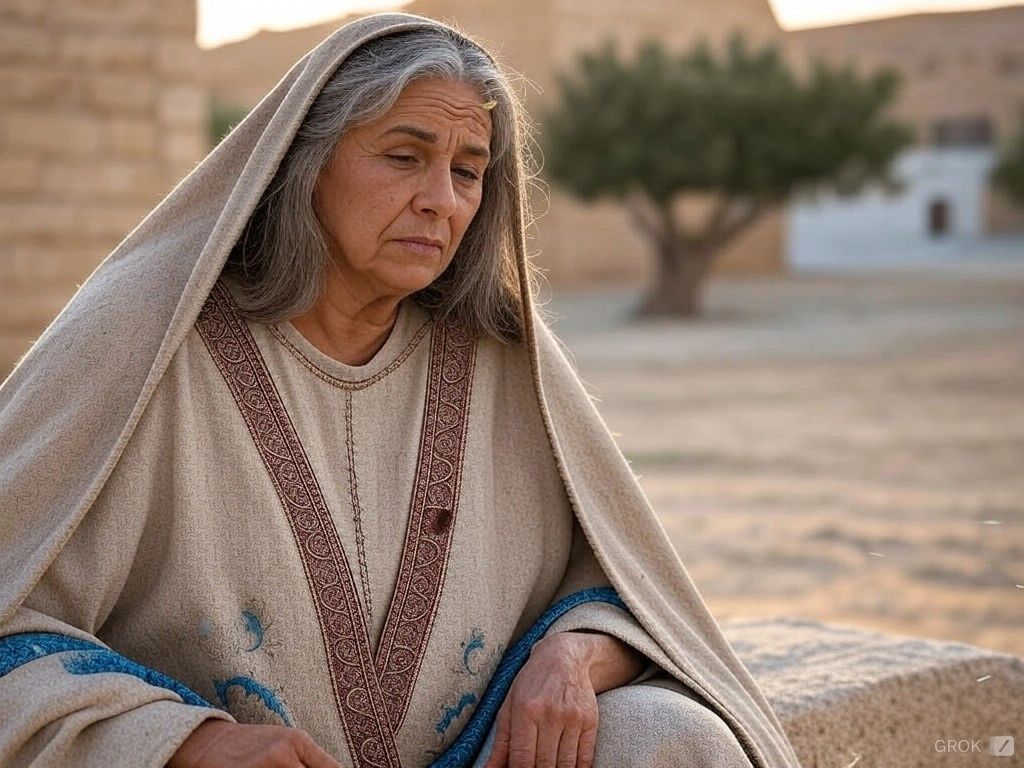
Naomi represents the “thorny ground” believers in Jesus’ parable of the Sower. These are the Christians who seem to have one foot in the Church and one foot in the world. There is something lacking in their commitment to the Lord Jesus.
“And the one on whom seed was sown among thorns, this is the one who hears the word, but the worries and distractions of the world and the deceitfulness [the superficial pleasures and delight] of riches choke the word, and it yields no fruit.”—Matthew 13:22 (AMP)
Naomi’s life seems to be a series of tragedies, but they are tragedies that she brought upon herself through her own choices.
Naomi seems to have a worldly mindset. She seems to be a product of the culture around her. Naomi lived “in the days when the judges governed” (Ruth 1:1 AMP). This is described as a time when “every man did what was right in his own eyes” (Judges 21:25 AMP). At this time, God’s people did not often seek Him for guidance as they should.
Walking Away from God’s Calling
Namoi’s choice to leave Bethlehem (the “House of Bread”), and to seek provision in Moab—a land of unbelievers that was outside of God’s calling—was disastrous for Naomi. She and her family left the land of God’s provision and protection. This decision resulted in the deaths of her husband and both of her sons. God had not told her family to leave Bethlehem. This was their own decision.
Naomi’s choices are the choices of a “thorny ground” believer who goes through the motions of being a Christian, but also flirts with being a friend of the world. She does not have a single-eyed focus on seeking her Redeemer, like Ruth does. Naomi is caught up with the anxieties and cares of worldly life. She and her husband seem to have left the land of God’s calling because of “the deceitfulness of riches,” seeking prosperity outside of God’s will.
Sadly, many of us experience tragedies and unnecessary problems far too often when we do what makes sense to us, but we do not seek guidance from the Lord.
“There is a way which seems right to a person, But its end is the way of death.”—Proverbs 14:12 and Proverbs 16:25 (NASB)
Embracing Bitterness
Naomi’s bad choices did not stop there. She continued making bad choices by blaming God for her misfortunes.
“the Lord’s hand has gone against me.”—Ruth 1:13 (AMP)
God did not tell Naomi to go to Moab. God had not told Naomi to leave the place of His provision and protection, and yet God was blamed when these choices resulted in tragedy. Naomi became angry at God, refusing to forgive God for the tragedies she had brought upon herself. As a result, she embraced the bitterness in her heart, coming into agreement with the lies of the enemy. She even embraced bitterness as her new identity, telling people to call her Mara, meaning “bitter.”
“Do not call me Naomi (sweetness); call me Mara (bitter), for the Almighty has caused me great grief and bitterness. I left full [with a husband and two sons], but the Lord has brought me back empty. Why call me Naomi, since the Lord has testified against me and the Almighty has afflicted me?”—Ruth 1:20-21 (AMP)
This is extremely dangerous because whenever we reject the Truth of God and embrace sin to the point where we adopt it as part of who we are, then we open ourselves up to demonic influence. If we come into agreement with devils, then we shouldn’t be surprised when they come to take up residence within us.
Not Seeking the Face of Her Redeemer
In chapter two of the book of Ruth, we learn that Naomi’s choices were even worse than we thought.
We learn from her conversation with Ruth that Naomi knew who Boaz was.
“Her mother-in-law said to her, ‘Where did you glean today? Where did you work? Blessed be the man who took notice of you.’
“So she told her mother-in-law with whom she had worked and said, ‘The name of the man with whom I worked today is Boaz.’
“Naomi said to her daughter-in-law, ‘May he be blessed of the Lord who has not ceased His kindness to the living and to the dead.’ Again Naomi said to her, ‘The man is one of our closest relatives, one who has the right to redeem us.’”—Ruth 2:19-20 (AMP)
She clearly understood that Boaz was her redeemer, and yet Naomi did not have a single interaction with her Redeemer throughout the entire book of Ruth. Not a single one! Boaz was Naomi’s redeemer before he was Ruth’s redeemer, and yet, there is not a single indication that Naomi ever sought her redeemer or interacted with him at all!
In the law, God had made provisions to help His people if they fell on hard times. Close relatives were given the responsibility to help their poor relatives in these situations. The relatives who had the ability and responsibility to help their family members were known as “kinsman redeemers.”
“If a fellow countryman of yours becomes so poor he has to sell some of his property, then his nearest relative is to come and buy back (redeem) what his relative has sold.”—Leviticus 25:25 (AMP)
In this way, the property would stay in the family. Property would not be lost. Then, at the year of Jubilee, the property would revert back to the original owners.
In Israel, even if a relative became so poor that he was forced to sell himself into slavery to pay his debts, a family redeemer could buy back this relative and free him from slavery.
“Suppose a foreigner or temporary resident becomes rich while living among you. If any of your fellow Israelites fall into poverty and are forced to sell themselves to such a foreigner or to a member of his family, they still retain the right to be bought back, even after they have been purchased. They may be bought back by a brother, an uncle, or a cousin. In fact, anyone from the extended family may buy them back. They may also redeem themselves if they have prospered.”—Leviticus 25:47-49 (NLT)
So, knowing this, why did Naomi and her family leave Bethlehem to seek a better opportunity in Moab? That decision was disastrous for the entire family. Naomi lost her husband and both of her sons after making that decision to leave God’s land of provision and protection. If she knew about her redeemer, why didn’t she seek his help? Boaz, who represents the Lord Jesus, was a man of great wealth and influence, and he would have been obligated under the law to help Naomi’s family during tough times.
This is symbolic of Christians who do not fully trust the Lord. They do not believe that God can be depended upon to help them in times of need, and so they turn to the world and to worldly solutions for their problems. These are “thorny ground” believers that Jesus described in His parable of the Sower who have one foot in the Church and one foot in the world. These are believers who get caught up in the cares and anxieties of life and the pursuit of wealth. You probably wouldn’t even know they are Christians by the way they live because their choices often do not reflect Christian principles and their lives do not produce the mature fruit of the Spirit.
Missing Out on God’s Best
As we follow the story of Ruth, we see that even after Naomi learns that Ruth has been welcomed to gather grain in the field of Boaz, her kinsman redeemer, Naomi never goes herself to gather anything.
Later, Naomi advises Ruth to seek a marriage with her redeemer, even though Boaz is probably closer in age to Naomi than to Ruth (See Ruth 3:10). Naomi never seeks an intimate relationship with the redeemer herself. Instead, Naomi only seeks to profit from her relationship with Boaz by selling a piece of property to him (See Ruth 4:3).
This is all symbolic.
Naomi represents those “thorny ground” Christians from Jesus’ parable of the Sower who are double-minded with one eye on the things of God and the other eye on the things of the world. These believers are content to be involved in ministry, like the priests who ministered in the Holy Place of the Tabernacle, but they do not have the hunger to pursue an intimate relationship with their Redeemer that would allow them to enter in beyond the veil into the Holies of Holies. These foolish virgins miss out on God’s best, tragically, because they lack the hunger, the single-minded motivation, and the deep personal commitment of the wise virgins like Ruth who are the Overcomers, the Bond Servants of Jesus Christ who hold nothing back in their pursuit of the Heavenly Bridegroom.
It is remarkable to read the detailed advice that Naomi gives to Ruth and to realize that Naomi does not follow any of that advice herself!
“Then Ruth the Moabitess said, ‘He also said to me, “Stay close to my servants until they have harvested my entire crop.”’
“Naomi said to Ruth, ‘It is good, my daughter, for you to go out [to work] with his maids, so that others do not assault you in another field.’”—Ruth 2:21-22 (AMP)
Here, Naomi agrees that Ruth should stay in the field of Boaz and not venture off to any other field, but why didn’t Naomi follow that advice herself? When times got tough for her and her family, she abandoned the land of her redeemer and sought her fortunes among the unclean unbelievers in Moab!
Later, Naomi was able to give Ruth the guidance that allowed Ruth to enter into an intimate marriage relationship with her redeemer and to enjoy all of the blessings of being the wife of a strong man of great wealth and influence.
That may be the greatest tragedy of all, because Naomi knew all of the right things to do, but she herself never did those things. Because of this, Nomi missed out on all that Ruth enjoyed.
This pictures for us the great tragedy of Christians who may have been raised in Church and may have known God for most of their lives, but they do not do what they know is best. This robs them of God’s best for all eternity.
The foolish virgins in Matthew 25 came so close! They were at the door! They knew the way, but in the end, they did not prepare themselves, and they were locked out of the wedding celebration. They missed out on God’s greatest rewards for all eternity!
When we read the promises to the Overcomers in Revelation chapters 2 and 3, how can we *not *lay aside everything that would hinder us, and pursue God’s best with single-minded determination?
This was the mindset of the Apostle Paul.
“But what things were gain to me, these I have counted loss for Christ. Yet indeed I also count all things loss for the excellence of the knowledge of Christ Jesus my Lord, for whom I have suffered the loss of all things, and count them as rubbish, that I may gain Christ and be found in Him, not having my own righteousness, which is from the law, but that which is through faith in Christ, the righteousness which is from God by faith; that I may know Him and the power of His resurrection, and the fellowship of His sufferings, being conformed to His death, if, by any means, I may attain to the resurrection from the dead.
“Not that I have already attained, or am already perfected; but I press on, that I may lay hold of that for which Christ Jesus has also laid hold of me. Brethren, I do not count myself to have apprehended; but one thing I do, forgetting those things which are behind and reaching forward to those things which are ahead, I press toward the goal for the prize of the upward call of God in Christ Jesus.”—Philippians 3:7-15 (NKJV)
“He who overcomes shall inherit all things, and I will be his God and he shall be My son.”—Revelation 21:7 (NKJV)
Reference: Cummins, D. (2021). I Am Ruth Thy Handmaid. Capitol Worship.