A Deeper Dive Into the Book of Revelation - Part 18
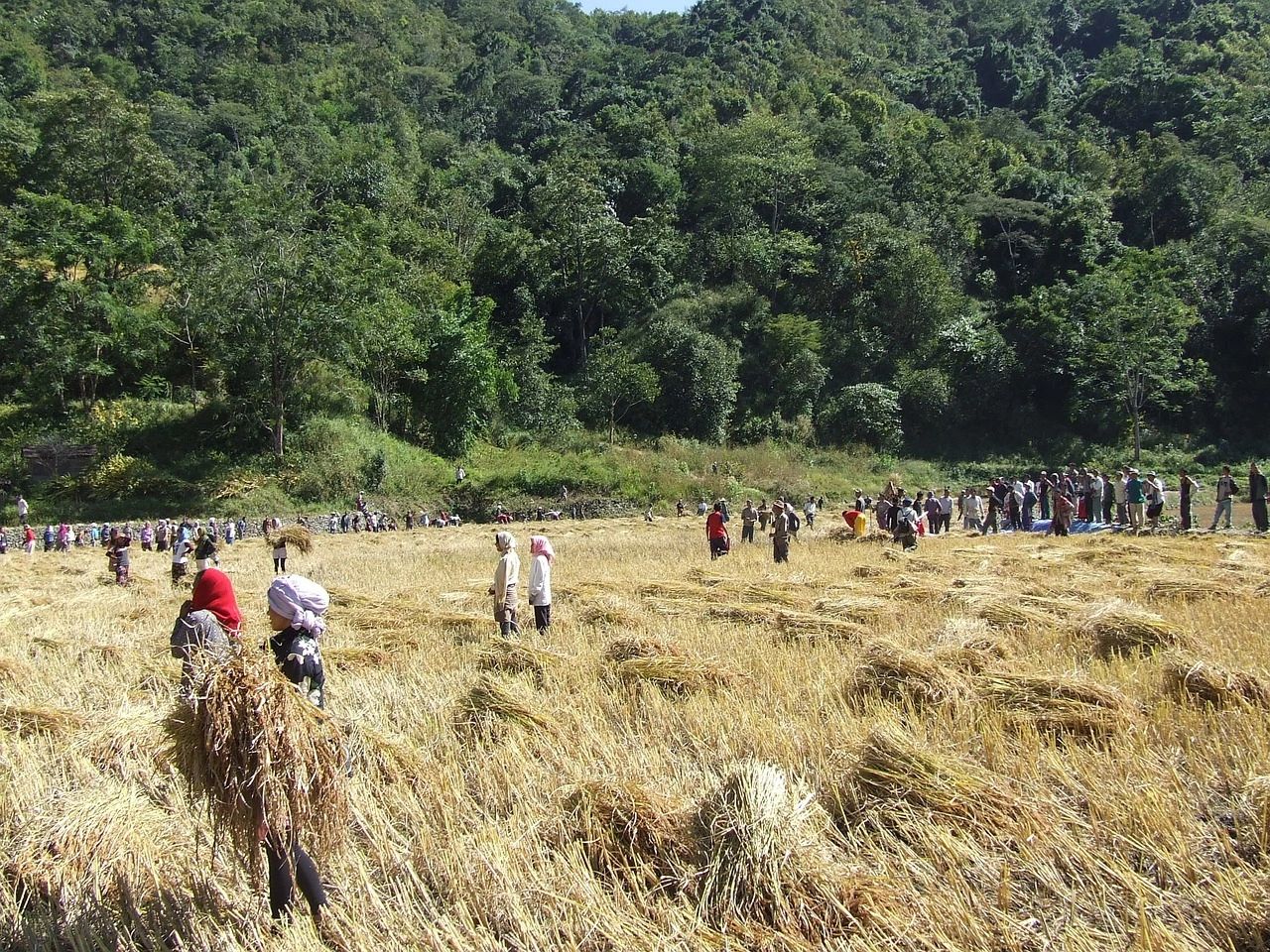
To understand why the 144,000s are called “firstfruits” in Revelation 14:4, we need to understand God’s instructions for the harvest that were given to Israel. God’s instructions divided the harvest into three groups. These three groups correspond to the three groups of believers that Jesus defined for us in His parable of the Sower.
-
Firstfruits
-
Main Harvest
-
Gleanings
1. The Firstfruits
As Dan Cummins points out in his book, Until the Harvest, the firstfruits come to maturity before the main harvest of wheat. Sometimes, this is used to describe the barley harvest which ripened before the wheat harvest each year. We see this in the Book of Ruth.
“So she stayed close by the young women of Boaz in order to glean until the end of the barley harvest and the wheat harvest.”—Ruth 2:23 (NASB)
Special instructions were given for the firstfruits. They were not taken to the barn, like the main harvest. Firstfruits were taken directly to the Lord.
“The first of the firstfruits of your land you shall bring **into the house of the Lord your God.”—**Exodus 23:19 and Exodus 34:26 (NKJV)
This is what happens to the group in Revelation 14:1-5. They were taken before the main harvest that we see later in the chapter. These firstfruits were taken directly to the Lord, and they stand with Him on Mount Zion in Heaven.
These Firstfruits are the Overcomers of Revelation chapters 2 and 3. These are the wise virgins of Matthew 25. These are the ones who receive the Word of God into hearts of “good soil” and bear fruit as Jesus described in the parable of the Sower.
These “firstfruits” seem to be taken *before *the Great Tribulation, arriving in Heaven before the warnings about the Antichrist that are sent out later in Revelation 14.
2. The Main Harvest
The main harvest of believers takes place *after *the firstfruits harvest, as we see in Revelation 14:14-16. From their description in Revelation 15:2-4, these believers go through the Great Tribulation period. They are caught up to meet the Lord at the sound of the last trumpet, which signals the end of the Great Tribulation period.
This is consistent with Jesus’ description of the main harvest in the parable of the Wheat and the Tares.
“Let both grow together until the harvest, and at the time of harvest I will say to the reapers, “First gather together the tares and bind them in bundles to burn them, but gather the wheat into my barn.”—Matthew 13:30 (NKJV)
The main harvest is taken, not to the *house *of the Lord, but to the barn.
It is on the journey to the barn where we encounter the threshing floor.
It is at the threshing floor that the chaff is separated from the grain. The chaff is discarded, and the pure grain is saved.
As the wheat is brought to the threshing floor, oxen will walk across the grain to break and crush the kernels.
Then the farmer will take his winnowing fork and toss the crushed grain up into the air. The chaff will be blown away with the wind, and the pure grain will fall back to the floor.
Sometimes we forget the prophecy of John the Baptist which promises the threshing floor experience to the Church.
“His winnowing fan (shovel, fork) is in His hand, and He will thoroughly clear out and clean His threshing floor and gather and store His wheat in His barn, but the chaff He will burn up with fire that cannot be put out.”—Matthew 3:12 (AMPC)
Tradition sometimes depicts the devil with a pitchfork in his hand, but in truth, it is actually Jesus who comes to us with pitchfork in hand to “separate the precious from the vile” as we read in Jeremiah 15:19.
We often confuse the works of God with the works of the devil, thinking that Satan is attacking us when it is really God who is working to bring us to maturity.
In the book of Revelation, Jesus’ threshing floor has a name. It is called the Great Tribulation.
It is interesting to note that in ancient times, some farmers used a threshing tool called a “tribulum” to help them separate the grain from the chaff.
The Great Tribulation has mistakenly been viewed as the wrath of God. That is not true. The wrath of God is contained in seven bowls which are poured out after the Great Tribulation and *after *all faithful believers have been caught up to Heaven. This is clearly described in Revelation chapters 15 and 16.
As Dan Cummins teaches us, the Great Tribulation serves two purposes:
-
To bring righteous judgment to the devil and to a fallen world.
-
To purify the Church and bring her to maturity.
“till we all come to the unity of the faith and of the knowledge of the Son of God, to a perfect man, to the measure of the stature of the fullness of Christ”—Ephesians 4:13 (NKJV)
3. The Gleanings
The third part of the harvest is the gleanings, which are not harvested at all, but are left in the field, as God instructed Israel.
“And when you reap the harvest of your land, you shall not reap your field to its very corners, neither shall you gather the fallen ears or gleanings of your harvest. And you shall not glean your vineyard bare, neither shall you gather its fallen grapes; you shall leave them for the poor and the stranger. I am the Lord your God.”—Leviticus 19:8-10 (AMPC)
Jesus told us very clearly about this group of believers in the parable of the Sower.
“As for what was sown on rocky ground, this is the one who hears the word and immediately receives it with joy, yet he has no root in himself, but endures for a while, and when tribulation or persecution arises on account of the word, immediately he falls away.”—Matthew 13:20-21 (ESV)
Paul told us that this will happen around the time that the Great Tribulation starts. These nominal believers will abandon Jesus in a great falling away. Many of them will deny the faith and return to their old lifestyles.
“Now, brethren, concerning the coming of our Lord Jesus Christ and our gathering together to Him, we ask you, not to be soon shaken in mind or troubled, either by spirit or by word or by letter, as if from us, as though the day of Christ had come. Let no one deceive you by any means; for that Day will not come unless the falling away comes first”—2 Thessalonians 2:1-3 (NKJV)
Jesus experienced a great falling away in his own ministry when some disciples were offended by something Jesus said. Many turned back and never followed Him again.
“When many of His disciples heard this, they said, ‘This is a difficult and harsh and offensive statement. Who can [be expected to] listen to it?’ … As a result of this many of His disciples abandoned Him, and no longer walked with Him.”—John 6:60-66 (AMP)
I wonder if this “great falling away” that is coming will be the moment in time when the Laodicean believers are vomited out of the mouth of God as we read in Revelation 3:16:
“So because you are lukewarm (spiritually useless), and neither hot nor cold, I will vomit you out of My mouth [rejecting you with disgust].” (AMP)
These fallen believers should have no expectation of being included in the rapture of the Church after rejecting their faith and turning away from their Savior.
These gleanings are represented by the servant in the parable of the talents who did nothing with what his master had given him.
“But his lord answered and said to him, ‘You wicked and lazy servant, you knew that I reap where I have not sown, and gather where I have not scattered seed. So you ought to have deposited my money with the bankers, and at my coming I would have received back my own with interest. So take the talent from him, and give it to him who has ten talents.
’For to everyone who has, more will be given, and he will have abundance; but from him who does not have, even what he has will be taken away. And cast the unprofitable servant into the outer darkness. There will be weeping and gnashing of teeth.’”—Matthew 25:26-30 (NKJV)
What will be the ultimate destiny of this group of gleanings? Will these believers be saved after they fall away and possibly deny the Lord Jesus Christ? What did Jesus say about this?
When Jesus gave his discourse on end-time events in Matthew chapter 24, He made a point of saying that “But **the one who remains faithful to the end **will be saved” (Matthew 24:13 ERV).
“But whoever denies and disowns Me before men, I also will deny and disown him before My Father Who is in heaven.”—Matthew 10:33 (AMPC)
This group of “stony ground” believers who are left behind as the gleanings after the harvest will not be included with the believers who are “caught up to meet the Lord in the air” (1 Thessalonians 4:17), and they will also not receive the same protections during the Great Tribulation period that the “thorny ground” believers of the Main Harvest will receive.
But there is still hope for them. As long as we have breath, we have opportunities to repent and turn back to Jesus. May God give these “gleanings” grace to return to Him!
But why will some believers be allowed to escape the Great Tribulation while others have to go through it? We’ll look at that as we continue this series.