A Deeper Dive Into the Book of Revelation - Part 4
Over time, the Church lost much of the power and the truth that God had given it from the time of Jesus’ ministry on earth, even losing the foundational doctrines of salvation by faith and water baptism for believers. Truth was replaced by error. Christianity became a religion of earning forgiveness and salvation through works. In the Dark Ages, people were forbidden even from reading or hearing the Word of God in their own language.
From her beginnings—filled with the power, life, and truth of God—the Church became little more than a sad, misguided, and deceived group of people vainly practicing a dead religion of works, hoping to do something good enough to earn places in Heaven someday.
But Jesus is coming back for His Church soon! And He is not coming back for a Church that is pitiful, powerless, and deceived. He is coming back for “a glorious church without a spot or wrinkle or any other blemish. Instead, she will be holy and without fault” (Ephesians 5:27 NLT).
But Jesus cannot return until all things that have been lost and stolen from the Church have been restored, as Peter prophesied in Acts 3:21:
“Jesus must remain in heaven until the restoration of all things, about which God spoke long ago through his holy prophets.” (CEB)
In Joel 2:25, God declared this promise to His people:
“I WILL RESTORE”
God’s promise will be fully accomplished! His purposes cannot be defeated! And He will use *the Church *to display His incomparable wisdom and power to the world and to the forces of darkness!
“[The purpose is] that **through the church **the complicated, many-sided wisdom of God in all its infinite variety and innumerable aspects might now be made known to the angelic rulers and authorities (principalities and powers) in the heavenly sphere.
“This is in accordance with the terms of the eternal and timeless purpose which He has realized and carried into effect in [the person of] Christ Jesus our Lord”—Ephesians 3:10-11 (AMPC)
Restoration of the Word of God
As the Church descended into the Dark Ages, we lost the very foundational principles of the Christian faith that Paul described in Hebrews 6:1-3:
“Therefore, leaving the discussion of the elementary principles of Christ, let us go on to perfection, not laying again the foundation of repentance from dead works and of faith toward God, of the doctrine of baptisms, of laying on of hands, of resurrection of the dead, and of eternal judgment. And this we will do if God permits.” (NKJV)
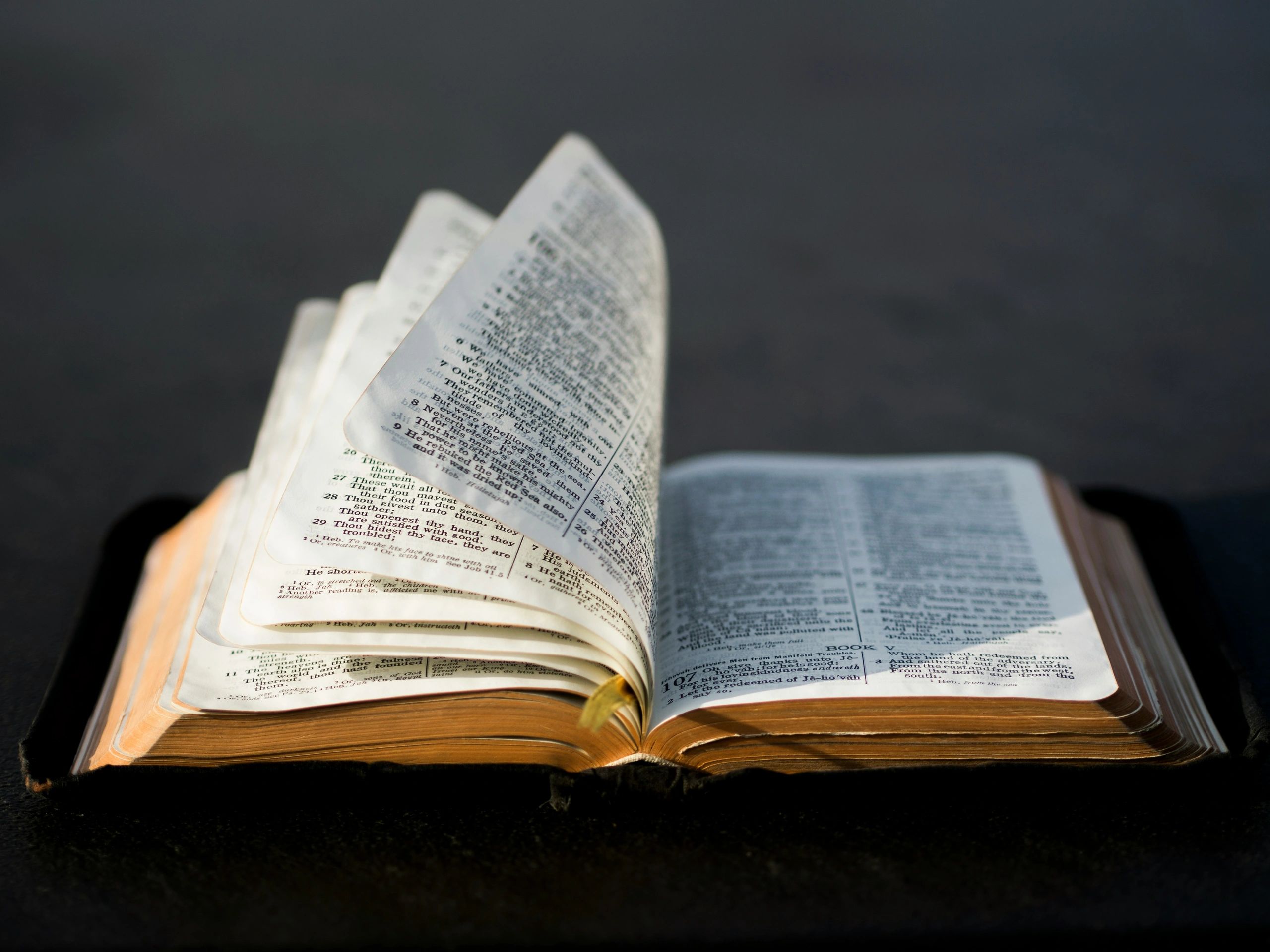
Then, in the darkest times of the Dark Ages, light began to dawn. The resurrection of the dead Church began to be seen. The restoration of all things, spoken of in Acts 3:21, began with the restoration of the Bible to the people of God.
In the 1370s, John Wycliffe defied the ungodly laws of the land and the corrupt authorities of the Church, and he translated the Bible into the common language of the English-speaking people.
Then in the 1400s, Johannes Gutenberg invented the printing press which allowed much easier duplication and distribution of Bibles, Christian books, and pamphlets.
This pairing of the restoration of Truth along with the invention of new technologies that allowed God’s Truth to be widely distributed has continued throughout this long period of the Restoration of All Things. God has raised up inventors, craftsmen, and artists to facilitate His work in the earth, just as He did with Bezaleel and Aholiab who created the Tabernacle in Moses’ time. These gifted inventors, craftsmen, and artists have been inspired by God to create the inventions that would allow God’s Truth to fill the whole earth.
This is important for us to understand. The person who brings the message is not more important than the person who prints and distributes it. As gifted and anointed as Moses was, he could not have done what Bezaleel and Aholiab did. As intelligent and gifted as Wycliffe was, he could never have done what Gutenberg did. God’s work cannot be accomplished without the contributions of the craftsmen, the artists, and the laborers. Without them, the Body of Christ is not complete, and the purposes of God will not be fully accomplished. As Paul taught us:
“Christ is just like the human body—a body is a unit and has many parts; and all the parts of the body are one body, even though there are many. We were all baptized by one Spirit into one body, whether Jew or Greek, or slave or free, and we all were given one Spirit to drink.
“Certainly the body isn’t one part but many. If the foot says, ‘I’m not part of the body because I’m not a hand,’ does that mean it’s not part of the body? If the ear says, ‘I’m not part of the body because I’m not an eye,’ does that mean it’s not part of the body? If the whole body were an eye, what would happen to the hearing? And if the whole body were an ear, what would happen to the sense of smell? But as it is, God has placed each one of the parts in the body just like he wanted. If all were one and the same body part, what would happen to the body? But as it is, there are many parts but one body.
“So the eye can’t say to the hand, ‘I don’t need you,’ or in turn, the head can’t say to the feet, ‘I don’t need you.’ Instead, the parts of the body that people think are the weakest are the most necessary. The parts of the body that we think are less honorable are the ones we honor the most. The private parts of our body that aren’t presentable are the ones that are given the most dignity. The parts of our body that are presentable don’t need this. But God has put the body together, giving greater honor to the part with less honor so that there won’t be division in the body and so the parts might have mutual concern for each other.”—1 Corinthians 12:12-25 (CEB)
As printing became easier, more people had access to the Word of God and spiritual truth. In the decades to come, the Bible became even more accessible. Martin Luther translated the Bible into the common language of the German people, and William Tyndale also translated the Bible into English. Gutenberg’s printing press allowed these translations to be mass produced and more easily distributed.
**Restoration of Salvation by Faith **
The light of restoration began to shine brighter in the 1500s with the revelation that “the just shall live by faith.” The Reformation restored the truth of salvation by faith in the sacrifice of Jesus Christ. Through the leadership of Martin Luther, Ulrich Zwingli, John Calvin, John Knox, and others, this truth was declared, printed, and spread throughout the Church.
Along with this restoration of truth came severe persecution. Satan was not going to give up without a fight. William Tyndale was strangled before being burned at the stake. Martin Luther was excommunicated, which meant that “one was removed from God’s grace & Christian fellowship, effectively cut off from family, work, & friend as an unrepentant heretic.” (Mark, 2021)
Jesus told us that severe persecution would come to His true disciples.
“and the time is coming when those who kill you will think they are doing a holy service for God.”—John 16:2 (NLT)
Paul made it clear that persecution will accompany all of Jesus’ true disciples.
“Yes, and everyone who wants to live a godly life in Christ Jesus will suffer persecution.”—2 Timothy 3:12 (NLT)
Reformers “of whom the world was not worthy” gladly accepted persecution even unto death for the cause of the restoration of the Truth of the Gospel of Jesus Christ. As it is written in Hebrews 11:35, “others were tortured [to death], refusing to accept release [offered on the condition of denying their faith], so that they would be resurrected to a better life” (AMP). Foxe’s Book of Martyrs is filled with the accounts of these heroes of the faith.
Restoration of Believer’s Baptism
The 1500s also saw the restoration of believer’s baptism. The Anabaptists declared that the only true baptism was the baptism of adult believers who had publicly made a confession of faith in Jesus Christ.
The Anabaptists, like the leaders of the Reformation, suffered severe persecution for their convictions. Sadly, the most vehement persecution seemed to come from the established Church. Even Martin Luther recommended severe punishment for the Anabaptists, branding them as heretics.
Tragically, this became a pattern of persecution in the Church. As God continued to move in the Church, restoring Truth that had been lost, the greatest persecution of the new move of God always seemed to come from those who had been involved in the last move of God.
This should be a somber warning to all of us. If Martin Luther, who was so mightily used by God in the Reformation movement, could be deceived into believing that the next move of God was actually of the devil, any of us could fall to the same deception! We must heed the instruction of Proverbs 3:5-6:
“Trust in the Lord with all your heart, And lean not on your own understanding; In all your ways acknowledge Him, And He shall direct your paths.” (NKJV)
Move with the Pillar
God’s people in the wilderness had to move when the Pillar of Cloud and the Pillar of Fire moved. (See Exodus 13:21.) If they chose not to move with God, then God left them behind.
We must understand that God has never stopped moving. We are still living in the time of “the restoration of all things” that must be accomplished before Jesus can return, as we are told in Acts 3:21. God is still moving. He is still working through imperfect individuals to bring about the restoration of all things that the Church has lost since Jesus walked the earth and ministered among us.
There may not be a physical Pillar of Fire or Cloud visible to us today, but God is still moving and leading the Church into the progressive revelation and restoration of Truth. Each new move of God looks different from the last move of God, and each move of God leads us into a new revelation of God’s Truth.
God is not creating new Truth. His Truth was established before the creation of the world, but with each new move of God, He reveals more of His Truth to us in ways that we have never seen it before.
Then the choice is ours whether to believe and accept it, or to reject it in unbelief. If we reject God’s Truth at any point, we are left behind, just like the children of Israel in the wilderness, and we will never experience the fullness of the “Promised Land” that God wants to bring us into. This is the somber warning of Hebrews chapter 4.
“Let us therefore fear, lest, a promise being left us of entering into his rest, any of you should seem to come short of it. For unto us was the gospel preached, as well as unto them: but the word preached did not profit them, not being mixed with faith in them that heard it.”—Hebrews 4:1-2 (KJV)
“Let us labour therefore to enter into that rest, lest any man fall after the same example of unbelief.”—Hebrews 4:11 (KJV)
We may not understand the new move of God, but God doesn’t ask us to understand everything that He does. He only asks us to believe and follow Him.
“No one has ever seen, no one has ever heard, no one has ever imagined what God has prepared for those who love him.”—1 Corinthians 2:9 (ERV)
Just because we don’t understand something does not mean that it is not of God. God has a long history of doing strange things that people did not understand.
“The Lord will rise up to judge, just as he did at Mount Perazim. He will get up to act, just as he did in the Valley of Gibeon. He’ll do his work, but it will be strange work. He’ll carry out his task, but it will be an unexpected one.”—Isaiah 28:21 (NIRV)
The behavior of the disciples looked very strange on the Day of Pentecost, but what they were experiencing was a genuine move of God.
Later, in Acts chapter 10, Peter was very confused when God was trying to show him that it was time to take the Gospel to the Gentiles in Cornelius’ household. God had to speak the same message to Peter three times before Peter finally was willing to obey the strange thing that God was asking him to do! And then, as Peter was sharing the Gospel message with Cornelius’ family, they were all baptized in the Holy Spirit before they had ever made confessions of faith! Very strange! But it was definitely a move of God!
How do we know if a move is from God or not, especially since these moves of God often seem strange to us?
We do not judge a move of God based solely on the behavior of the leaders. People are not perfect. God has always used imperfect people to accomplish His will. Moses had murdered an Egyptian. David committed adultery and had the woman’s husband killed. Peter denied Jesus with cursing. Paul persecuted Christians. But they all repented of their sins and were mightily used by God. We must learn to separate the genuine moves of God from the imperfect people that God uses to accomplish them. We can’t just throw away our faith in God because some leaders make terrible mistakes. Satan wins when we do that … and we lose out.
Jesus told us how to discern the validity of the message and the messenger.
“Beware of false prophets, who come to you in sheep’s clothing, but inwardly they are ravenous wolves. You will know them by their fruits. Do men gather grapes from thornbushes or figs from thistles? Even so, every good tree bears good fruit, but a bad tree bears bad fruit. A good tree cannot bear bad fruit, nor can a bad tree bear good fruit. Every tree that does not bear good fruit is cut down and thrown into the fire. Therefore by their fruits you will know them.”—Matthew 7:15-20 (NKJV)
Ask yourself, does the movement bring people closer to Jesus, or does it inspire works of the flesh as described in Galatians 5? Do the people involved in this movement demonstrate more of the character of Christ as a result? Paul wrote in Romans 14:17 that the kingdom of God is “righteousness, and peace, and joy in the Holy Ghost.” Is that evident in this movement?
I remember that one of the things that helped to convince me that the Charismatic Renewal was a genuine move of God was that, in general, the people involved in that movement seemed to be more like Christ in their words and actions than people who had rejected it.
No matter how strange a move of God may appear to us, if it is truly of God, it will bring a new revelation of God’s Truth and lead us closer to the restoration of all things in preparation for the return of Jesus Christ.
The Restoration as Seen in the Tabernacle Furniture
As the light of God’s truth began to dawn in the Dark Ages, the truths of salvation by faith and believer’s baptism were restored to the Church.
These two foundational truths are symbolized in the Outer Court of the Tabernacle of Moses.
If you entered the gate of the Tabernacle, the first piece of “furniture” you would see would be the bronze altar. It was upon this altar that sacrifices were made to pay for the sins of the people. This bronze altar represents the foundational truth of salvation through a blood sacrifice. It represents the sacrifice of Jesus Christ who paid for our sins with His own blood. The Reformation of the 1500s restored this truth to the Church.
After the bronze altar, the next piece of furniture that you would encounter would be the bronze laver, which was basically a giant bronze bowl filled with water. This laver represents the truth of water baptism for believers. This was the next great Truth to be restored to the Church through the revelation given to the Anabaptists in the 1500s.
It is remarkable to see that God’s restoration of Truth through the ages has proceeded in the order of the placement of the Tabernacle furniture! It is as if He has been taking the Church through the Tabernacle, from the Outer Court, then through the Holy Place toward the Holy of Holies, as we move closer and closer to the Ark of the Covenant and the manifested presence of Almighty God on earth again!
The Reformation of the 1500s restored the Truths represented in the Outer Court of the Tabernacle. The Restoration of All Things would continue in the 1700s with the restoration of the Truths represented in the Holy Place, the second main area of the Tabernacle.
Reference:
Mark, J. J. (2021, December 15). 1521 Excommunication of Luther: Complete Text. World History Encyclopedia. https://www.worldhistory.org/article/1903/1521-excommunication-of-luther-complete-text/