A Deeper Dive Into the Book of Revelation - Part 70
“Wake up! Strengthen what little remains, for even what is left is almost dead. I find that your actions do not meet the requirements of my God. Go back to what you heard and believed at first; hold to it firmly. Repent and turn to me again.”—Revelation 3:2-3 (NLT)
This wake-up call that Jesus gave to the Church in the Sardis Age had a revolutionary effect! Jesus’ wake-up call ignited the Reformation and led the Church to begin taking back and restoring all that the forces of Darkness had stolen from us during the Dark Ages.
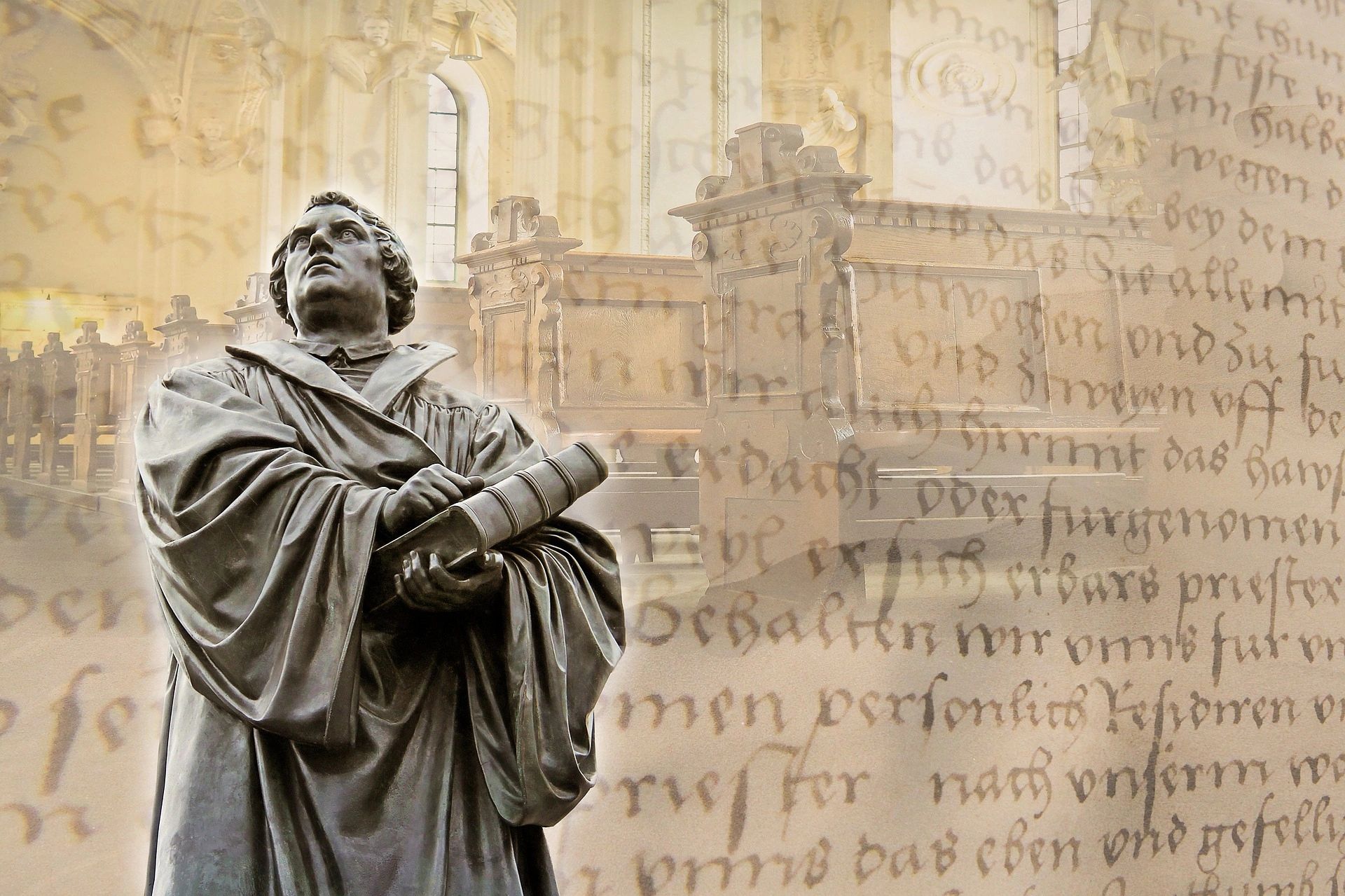
The primary messenger to the Sardis Church Age was most likely Martin Luther. More than any other person, Martin Luther represents this time of the Protestant Reformation and the separation from the false church of Rome that had corrupted and subjugated the pure Gospel of Jesus Christ in favor of its own counterfeit man-made traditions and sacraments.
Martin Luther was named after Martin of Tours who was the primary messenger to the Pergamum Church Age. In 1505, after a frightening experience of being knocked to the ground by the force of a lightning strike during a thunderstorm, Luther vowed to become a monk. Luther devoted himself wholeheartedly to service and sacrifice to God, eventually becoming a priest. His devotion was so complete that he later said that if anyone could have achieved salvation through monkery, it would have been him.
In 1510, Luther was sent to Rome to take care of some business for the Church. He expected to be visiting a place where holiness and righteousness reigned. He expected to find a place that would be the closest thing to Heaven that holy men and women could achieve here on earth.
What he found was much different than what he expected. Luther’s first impressions of Rome were profoundly disillusioning, shattering his idealistic view of the “Holy City.” He found a “sea of iniquity” where corrupt, worldly clergy rushed through holy rituals, mocked the Mass, and engaged in worldly pleasures, leading him to declare Rome a “cesspit of sin” built on hell, where the Church’s extravagance and focus on money overshadowed true faith, planting seeds for the Reformation to come.
Restoration of the Doctrine of Justification by Faith
What Luther experienced in Rome confused and angered him. He realized that the Church was not helping the people or leading them to salvation and holiness. The Church instead was exploiting the people and using them to enrich itself. This drove Luther to search the Scriptures for answers.
The Church couldn’t tell Luther how a sinful person can be made righteous in the eyes of God. The Church couldn’t tell him how a man can be freed of the guilt and shame of sin. Luther was driven to resolve this conflict in his soul.
He began to wrestle with the truth of Romans 1:17, which declares that, “The just shall live by faith.”
Through the revelation of the Holy Spirit, Luther finally understood that righteousness and salvation were gifts from God that could not be earned by works, but only by faith in the completed work of Jesus Christ.
Meanwhile, the printing press had been invented in Germany by Johannes Gutenberg. Soon, this new invention would be used to distribute the restored Truth of the Gospel message throughout Europe.
In Rome, Pope Leo X was making plans to build the grand St Peter’s Basilica. To fund the building program, a plan was devised to sell plenary indulgences that supposedly could pay for sins and free people from years of purgatory and hell. People could buy indulgences for themselves, their family members, or anyone else. It didn’t matter if the people were dead or alive. This is still the doctrine of the Roman Catholic Church today, as we read in the official Catechism of the Catholic Church:
“Through indulgences, the faithful can obtain the remission of temporal punishment resulting from sin for themselves, and also for the souls in Purgatory.” (CCC, 1498)
“The doctrine and practice of indulgences in the Church are closely linked to the effects of the sacrament of Penance.
“An indulgence is partial or plenary, according as it removes either part or all of the temporal punishment due to sin. The faithful can gain indulgences for themselves or apply them to the dead.” (CCC, 1471)
Johann Tetsel was the chief marketer and promoter of these indulgences. Of course the entire goal of selling these indulgences was not to give peace of mind to the Catholic believers. The goal of selling indulgences was to raise money to build St Peter’s Basilica. Indulgences were a deceitful invention of the Catholic Church that were designed to offer a false peace of mind to people in exchange for money.
Whenever Johann Tetsel arrived in a new town, he usually started his sales pitch by instilling fear in his audiences, and then he offered indulgences as a shortcut out of punishment for sin.
This deceitful practice of selling indulgences seemed to be the last straw that provoked and inspired Martin Luther to write his 95 theses and nail them to the door of the church in Wittenburg, Germany. In doing this, Luther was throwing down the gauntlet, so to speak, and challenging all comers to an open debate of these questions.
This challenge might have ended there, but people who were inspired by Luther’s 95 Theses copied them, printed them in the form of a pamphlet, and then distributed them to as many as they could.
In our modern terms, Luther’s 95 Theses went viral. In only 14 days, it seemed that everyone was reading and talking about Luther’s Theses that challenged the doctrines of the Catholic Church.
Luther’s intention had not been to directly challenge the authority of the Pope, but only to provoke debate. But with the spread of his 95 theses, Catholic authorities could not ignore Luther’s challenges to their doctrines.
In 1518, Luther was summoned to Augsburg to face an Imperial Diet where Luther was put on trial for his beliefs. Catholic authorities demanded that Luther recant and repent of his offenses against the Pope. Luther responded by challenging his accusers to show him by the Scriptures where he was wrong.
Orders had been given to arrest Luther if he failed to recant, but with help, Luther was able to escape arrest and slip out of the city at night.
Luther fled back to Wittenburg under protection of Frederich the Wise. There he was able to continue his study and writing.
That year, the Pope officially charged Luther with heresy, but the fire had already been lit. Luther’s teachings only grew in popularity, exposing the errors and deceptions of Catholic Church doctrine.
In 1521, the Pope excommunicated Luther. Later that year, Luther was summoned to the Diet of Worms before the German emperor. Again, Luther was put on trial to defend his teachings and his beliefs. Intense pressure was put upon him to retract what he had written.
Grave consequences were at stake. He knew that he faced severe punishment or death if he did not retract what he had written. But Luther was strongly influenced by the words of Christ, who said, “whosoever shall deny me before men, him will I also deny before my Father.”
Luther requested time to think and to consider his response. He spent that night in prayer to God, knowing that his response could cost him his life.
His interrogators had been unable to disprove Luther’s works by the Bible. The next day, the chief interrogator turned to Luther and demanded, “Give us a direct answer—one without horns. Will you or will you not recant your errors?”
Luther replied, “Since Your Majesty and Your Lordships want a direct reply, I will answer without horns or teeth. Unless convinced by the testimony of Scripture or right reason—for I trust neither the pope nor councils inasmuch as they have often erred and contradicted one another—I am bound in conscience, held captive by the Word of God in the Scriptures I have quoted. I neither can nor will recant anything, for it is neither right nor safe to act against conscience. God help me! Amen.”
Luther was temporarily released until a decision was made regarding his fate.
A few weeks later, the emperor signed the Edict of Worms.
“According to it, Luther was the devil himself in a monk’s habit. He was to be seized on sight and turned over to the emperor—an outlaw of the church and the state.” (Koppenhaver)
Soon afterwards, the Pope also signed a death warrant for Martin Luther.
But Luther had powerful friends and supporters. He was hidden and protected by Frederich the Wise in the Castle of Wartburg.
While there, he translated the New Testament into the language of the German people. And with the help of the newly invented printing press, people throughout Germany finally were able to read the Bible for themselves in their own language.
The Parable of the Hidden Treasure
The fifth letter to the church in Sardis corresponds to the fifth parable of the Kingdom of God in Matthew 13:44:
“Again, the kingdom of heaven is like treasure hidden in a field, which a man found and hid; and for joy over it he goes and sells all that he has and buys that field.” (NKJV)
Martin Luther discovered the treasure of the Truth that salvation is a free gift from God. It cannot be earned by works. We receive salvation by grace through faith in the finished work of Christ on the cross. This treasure had been hidden from the people for many years.
In this parable, when the man discovered the hidden treasure, he hid it again, but this time, the purpose was not to conceal the treasure, but to protect it. When Luther rediscovered this precious treasure, he sold everything he had, laying down his life for this precious treasure of the true Gospel of Salvation.
The Reformation spread throughout Europe with the help of great men and women of God like John Calvin, John Knox, William Tyndale, and Huldrych Zwingli. This great move of God brought restoration of truth to the world and put the Bible back into the hands of the common people.
Penance vs. Repentance
The Protestant Reformation and the ministry of Martin Luther were used by God to restore the Truth of salvation by grace through faith in the finished work of Jesus Christ on the cross.
This restoration of truth also exposed the deceptive errors of the Roman Catholic Church which still teaches that salvation must be earned through works of penance and the keeping of man-made sacraments, as we can see in the current version of the Catechism of the Catholic Church:
“It is through the sacrament of Penance that the baptized can be reconciled with God and with the Church: Penance has been rightly called by the holy Fathers ‘a laborious kind of baptism.’ This sacrament of Penance is necessary for salvation for those who have fallen after Baptism, just as Baptism is necessary for salvation for those who have not yet been reborn.” (CCC 980)
“By Christ’s will, the Church possesses the power to forgive the sins of the baptized and exercises it through bishops and priests normally in the sacrament of Penance.” (CCC 986)
“The Church also commends almsgiving, indulgences, and works of penance undertaken on behalf of the dead … Let us not hesitate to help those who have died and to offer our prayers for them.” (CCC 1032)
Martin Luther was used mightily by God to brilliantly dismantle the deceptions and false doctrines of the false church, as we can see in this example from Luther’s message, The Twofold Use of the Law & Gospel: “Letter” & “Spirit”:
“What mortal has ever discovered or fathomed the truth that the three persons in the eternal divine essence are one God; that the second person, the Son of God, was obliged to become man, born of a virgin; and that no way of life could be opened for us, save through his crucifixion? Such truth never would have been heard nor preached, would never in all eternity have been published, learned and believed, had not God himself revealed it.
“For this reason they are blind fools of first magnitude and dangerous characters who would boast of their grand performances, and think that the people are served when they preach their own fancies and inventions. It has been the practice in the Church for anyone to introduce any teaching he saw fit; for example, the monks and priests have daily produced new saints, pilgrimages, special prayers, works and sacrifices in the effort to blot out sin, redeem souls from purgatory, and so on. They who make up things of this kind are not such as put their trust in God through Christ, but rather such as defy God and Christ. Into the hearts of men, where Christ alone should be, they shove the filth and write the lies of the devil. Yet they think themselves, and themselves only, qualified for all essential teaching and work, self-grown doctors that they are, saints all-powerful without the help of God and Christ. ‘But our sufficiency is from God.’
“No seditious spirit, it is certain, ever carries out its own precepts, nor will he ever be capable of doing so, though he may loudly boast the Spirit alone as his guide. Of this fact you may rest assured. For such individuals know nothing more than the doctrine of works—nor can they rise higher and point you to anything else. They may indeed speak of Christ, but it is only to hold him up as an example of patience in suffering. In short, there can be no New Testament preached if the doctrine of faith in Christ be left out; the spirit cannot enter into the heart, but all teaching, endeavor, reflection, works and power remain mere ‘letters,’ devoid of grace, truth, and life. Without Christ the heart remains unchanged and unrenewed. It has no more power to fulfil the Law than the book in which the Ten Commandments are written, or the stones upon which engraved. ‘For the letter killeth, but the spirit giveth life.’”
References:
Koppenhaver, C. E. (1953). Martin Luther. Muhlenberg Press.
Luther, M. The 95 Theses. Martin Luther’s 95 theses. https://www.luther.de/en/95thesen.html
Luther, M. The Twofold Use Of The Law & Gospel: “Letter” & “Spirit.” Sermons | SermonIndex. https://www.sermonindex.net/sermons/95uN43Npv75DVc08
Off the Rails Australasia. (2017). Luther V Rome: How a Hammer and Nail Changed the World. Australia. Retrieved November 11, 2025, from https://www.youtube.com/watch?v=5EYuhEH0aAc
United States Conference of Catholic Bishops. Catechism of the Catholic Church. United States Conference of Catholic Bishops – Library. https://usccb.cld.bz/Catechism-of-the-Catholic-Church2
Wittenberg, K. Luther at the Imperial Diet of Worms (1521). Martin Luther’s life: The Imperial Diet of Worms. https://www.luther.de/en/worms.html
Next: Blotted Out of the Book of Life
Back: As a Thief