A Deeper Dive Into the Book of Revelation - Part 66
Jesus opens this fifth message in the same way that He begins all seven of these messages in Revelation chapters 2 and 3. He addresses His message to the chosen messenger of the church, and then Jesus identifies Himself as the author of the message.
“To the angel (divine messenger) of the church in Sardis write: ‘These are the words of Him who has the seven Spirits of God and the seven stars’”—Revelation 3:1 (AMP)
Of course, like all seven messages, this message was written for the people of the church at that time, but it was also written for a particular Church Age. The Sardis Church Age lasted from about 1520 to 1750. This was the Age of the Reformation.
This Sardis Church Age brought the Church out of the Dark Ages that are represented by the church in Thyatira. By the end of the Thyatira Church Age, almost everything that the Church stood for had been lost.
The five-fold ministry of apostles, prophets, evangelists, pastors, and teachers had been replaced by a man-made hierarchy of priests, bishops, cardinals, and popes.
Church leaders taught that the gifts of the Holy Spirit passed away with the first apostles.
The Church “had a form of godliness, but denied the power thereof,” claiming that miracles, signs, and wonders were not meant to be a part of the normal Christian lives of common believers.
The Truths of the Baptism of the Holy Spirit and the Baptism of Fire had been corrupted and were not taught.
The Church lost the true meaning of sanctification, holiness, and moral living. Immorality was rampant within the Church, even among its leaders.
True understanding of prayer to God was corrupted as people were falsely taught that prayers should be directed to Mary and other dead people who could neither hear nor respond to those prayers.
The true doctrine of water baptism was lost as it was replaced by the powerless tradition of christening.
Communion of the Lord’s Supper was replaced by Roman Catholic mass.
The Truth of salvation by grace though faith in Jesus Christ was replaced by a false gospel of works that taught that penance and the keeping of sacraments had to be done in order to earn salvation.
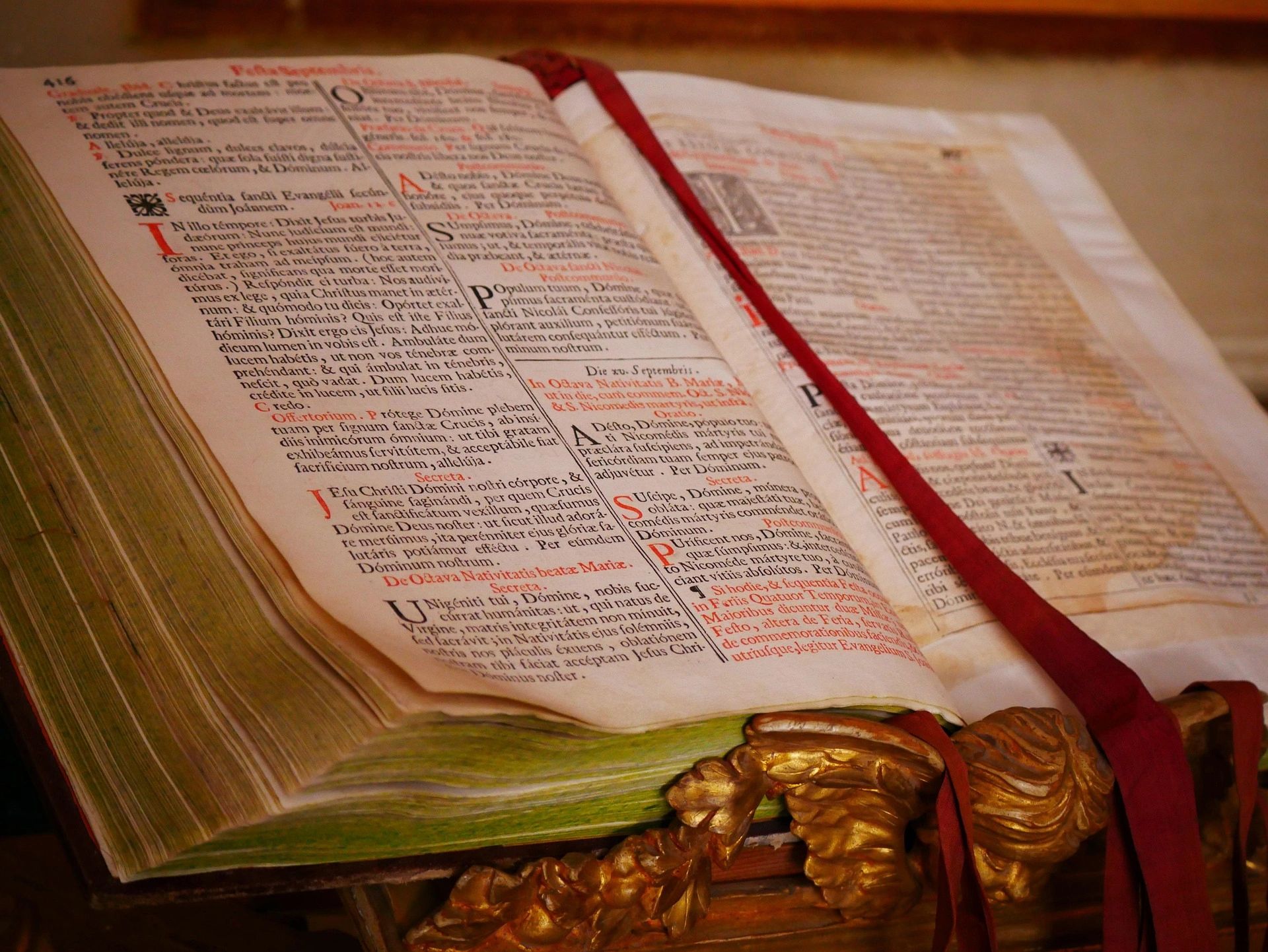
At the very darkest of the Dark Ages, even the Word of God was lost to the Church. The Bible was only allowed to be published and read in Latin, which the common people couldn’t understand, and it was only allowed to be read by the clergy.
The True Church was dead. This is how Jesus described it:
“‘I know your deeds; you have a name (reputation) that you are alive, but [in reality] you are dead.”—Revelation 3:1 (AMP)
It looked like Satan had won. It looked like every Truth that made the Church what it was had been lost, stolen, or corrupted into something false.
It looked like the True Church had been replaced by a false church.
But all was not lost!
Jesus begins His message to Sardis by proclaiming that He still has the seven Spirits of God and the seven stars (His chosen messengers). In reality, nothing has been permanently lost. Everything of eternal value is still in the safekeeping of Jesus Himself. The full anointings of the seven Spirits of God are still perfectly intact. The seven messengers who carry and steward the pure Gospel of Jesus Christ are still safely protected and preserved in Jesus’ right hand.
Just when the Church seems to be at its lowest point, God seems to say, “ENOUGH!” and He begins the process to restore all things to the Church during the Sardis Church Age!
“And I will restore to you the years that the locust hath eaten, the cankerworm, and the caterpiller, and the palmerworm”—Joel 2:25 (KJV)
The Morning Star of the Reformation
At the end of His previous message to the church in Thyatira, Jesus had promised to give the Morning Star to the Overcomer. One application of this, of course is that Jesus will give Himself because He is the Morning Star, as He tells us later in Revelation 22:16:
“I, Jesus, have sent my angel to give you this testimony for the churches. I am the Root and the Offspring of David, and the bright Morning Star.” (NIV)
But another application of this for the Church was that Jesus would bring light into the very dark times of the Dark Ages.
In the 1300s, this began with John Wycliffe, who became known as the “Morning Star of the Reformation.”
Wycliffe began calling out the abuses of the Roman Catholic Church, referring to the popes as “antichrists.” Wycliffe insisted that the Bible should be made available to all believers in their own language, and he translated the Bible into English. Wycliffe himself was an enthusiastic preacher of the word of God. He encouraged others to preach and to proclaim the truth of God’s Word throughout England.
Wycliffe died from natural causes in 1384.
In 1415, the Roman Catholic Council of Constance declared John Wycliffe a heretic. His bones were dug up and burned, and his ashes were dumped into the River Swift. The powerful symbolism of this event was noted in The Church History of Britain:
“They burned his bones to ashes and cast them into the Swift, a neighbouring brook running hard by. Thus the brook conveyed his ashes into the Avon, the Avon into the Severn, the Severn into the narrow seas and they into the main ocean. And so the ashes of Wycliffe are symbolic of his doctrine, which is now spread throughout the world.” (Calhoun)
With the ministry of John Wycliffe, the restoration of Truth had begun! Jesus gave this “Morning Star” to the Church to shine the light of God’s Truth and begin to bring and end to the Dark Ages, restoring hope and truth at a time of deep spiritual darkness.
References:
Calhoun, D. B. (2024, January 1). John Wycliffe: “The Morning Star of the Reformation.” C.S. Lewis Institute. https://www.cslewisinstitute.org/resources/john-wycliffe-the-morning-star-of-the-reformation/
Nichols, S. (n.d.). The Morning Star of the Reformation: John Wycliffe (c. 1330–1384). Desiring God. https://www.desiringgod.org/articles/the-morning-star-of-the-reformation