A Deeper Dive Into the Book of Revelation - Part 60
**The Messenger **
“And to the angel (divine messenger) of the church in Pergamum write:…”—Revelation 2:12 (AMP)
Depending on your Bible translation, this city may be called Pergamos (Greek) or Pergamum (Latin). According to the timeline given by William Branham, the Pergamean Church Age lasted from the time of Constantine’s acceptance of Christianity in 312 AD to about 606 AD when the Roman Emperor first declared the pope to be the “Universal Bishop” over the Catholic Church worldwide.
The messenger to this Pergamean Church Age was most likely Martin of Tours. Martin was raised by parents who were pagan, but he converted to Christianity early in his life. As the son of a Roman military officer, Martin served as a soldier from the time he was 15 until he asked to be discharged so that he could give himself fully to the service of God at age 23.
While Martin was serving in the military, he encountered a poor beggar on the streets who was shivering in the cold. Martin did not have an extra garment to give, but in his compassion for this poor man, Martin took his own cloak, cut it in half and gave half to the beggar.
That night, Martin awoke to a vision of the Lord Jesus Christ standing at the foot of his bed, wearing the cloak he had given to the beggar.
Martin served the Lord faithfully from that time on.
Martin actively opposed idolatry and any compromise with paganism or false gospels. In confrontations with pagans, Martin challenged them in much the same way that Elijah had challenged the prophets of Baal.
Martin’s life demonstrated the love and the power of Jesus Christ. There are historical accounts of Martin raising at least three people from the dead.
Martin exemplified true Christian character. One biographer wrote of him, “No one ever saw him angry, or disturbed, or grieving, or laughing. He was always one and the same, and seemed something beyond mortal, wearing on his countenance a sort of celestial joy. Never was anything on his lips but Christ, never anything in his heart but piety, peace and pity. Often did he weep for the sins even of those his detractors, who when he was quiet and absent attacked him with viperous lips and poisoned tongues. Many hated him for virtues they themselves did not possess and could not imitate; and alas! his bitterest assailants were bishops.”
As Bishop of Tours in France, Martin would not stand in the pulpit to deliver a message until he had first prayed and waited upon God to receive “the whole counsel of God” for the people. It did not bother Martin to keep people waiting until he was satisfied that he had received everything that God wanted to be delivered to the people at that time.
As it was for Jesus, Martin’s most bitter enemies seemed to be the religious leaders of his day. At one point, hired assassins entered Martin’s home in an attempt to murder him. Martin stood without fear to face his attackers. As they lunged for him, the would-be assassins were thrown backward by the power of God. Overwhelmed by the fear of God, the attackers crawled back to Martin on their hands and knees to beg forgiveness.
Jesus Reveals Himself
“‘These things says He who has the sharp two-edged sword”—Revelation 2:12 (NKJV)
Here, Jesus identifies Himself with the Word of God—the sharp two-edged sword of Hebrews 4:12. The Pergamean Church Age saw an attack on the Truth of the Gospel. The principles of the Gospel message were compromised as deception entered into the Church.
This Pergamean Church Age corresponds to the third parable of Matthew 13—the parable of the Mustard Seed:
“The kingdom of heaven is like a grain of mustard seed that a man took and sowed in his field. It is the smallest of all seeds, but when it has grown it is larger than all the garden plants and becomes a tree, so that the birds of the air come and make nests in its branches.”—Matthew 13:31-32 (ESV)
When the Church began with the ministry of Jesus the Sower, it was very small, like a mustard seed. Over the years, the Church grew from just a few disciples in the land of Israel to a growing number of thousands of disciples in many countries. But with its growth, the Church attracted the attention of the fowls of the air (demonic spirits). In the Pergamean Age, we see these deceiving spirits making their homes in the branches of the Church “tree.”
Some of these deceiving spirits brought compromise into the Church with the doctrine of Balaam. Others ushered in the doctrine of the Nicolaitans to divide and conquer the believers.
Severe persecution still took place during this Pergamean Age, but the greater threats to the Church were the deceiving spirits which built “nests” in the Church, deceiving many, and compromising the Truth of the Gospel message.
Satan’s Throne
“I know your works, and where you dwell, where Satan’s throne is.”—Revelation 2:13 (NKJV)
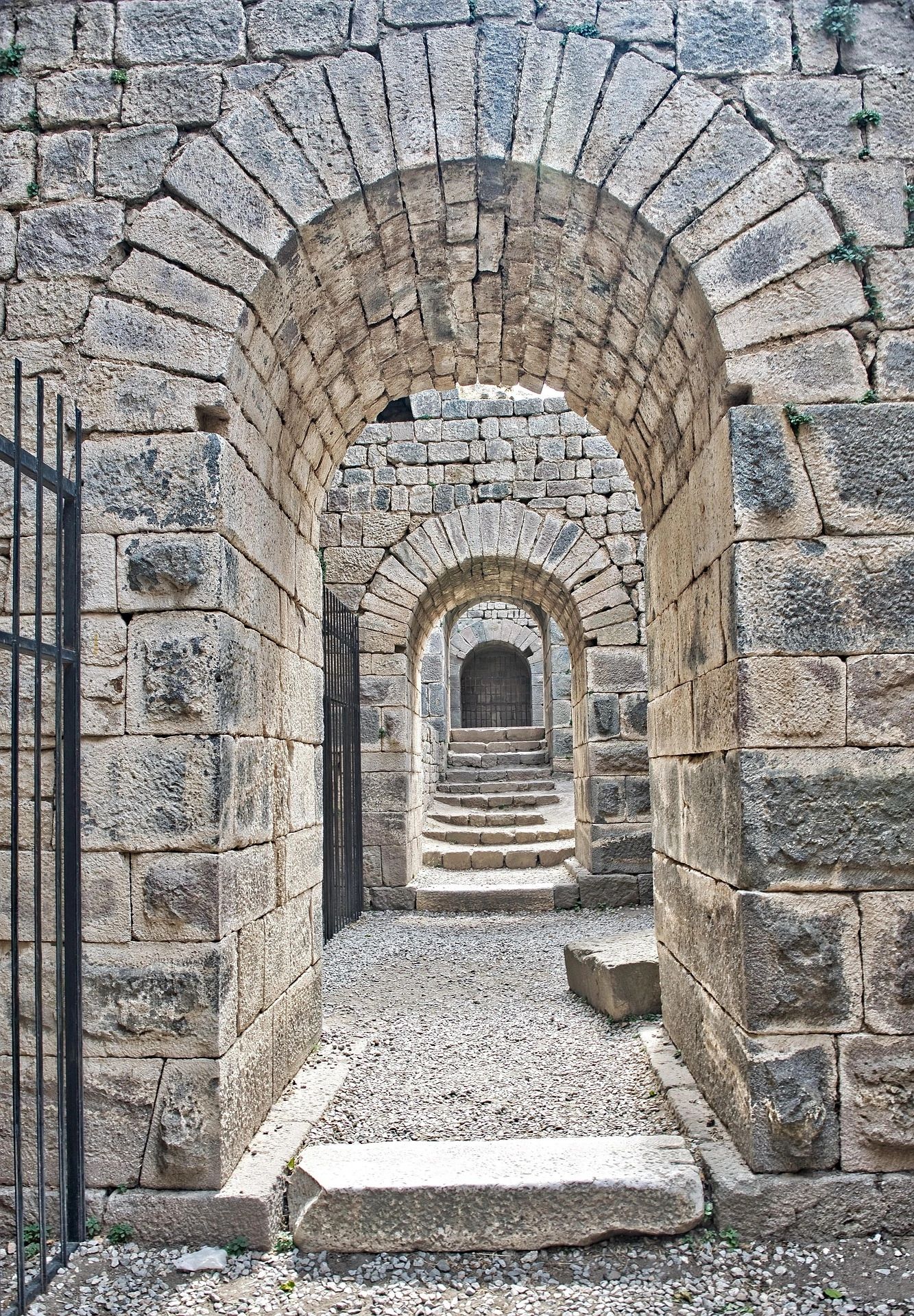
In Pergamum, there was a pagan temple dedicated to the goddess Athena, and not far from that temple was an altar, sometimes called the Great Altar of Zeus. Leading up to this altar there were many steps. At the top of the steps, there was a large, hollow brass bull. Many human sacrifices were made to the pagan gods by placing someone inside the brass bull, and the building a fire underneath. The brass bull then became an oven, cooking these human sacrifices to death.
Many believe that this was Satan’s throne (or Satan’s seat) in Pergamum.
The city of Pergamum also had a “healing center” built in honor of Asklepios, the Greek serpent god. Patients in this “healing center” would be drugged with a sedative and then spend the night in rooms with non-poisonous snakes. As the patients slept, the serpents crawled around them.
“It was believed that the snakes carried the healing power of Asklepios, and if a snake slithered across you while you were sleeping at night, that was a divine sign that healing power was coming to you.” (Robertson)
After sleeping with the serpents, the patients shared their dreams with the priests of Asklepios. The priests would then prescribe their treatments. Then the patients would make clay sculptures of the parts of their bodies that needed healing and present these sculptures as offerings to Asklepios.
**Antipas, God’s Faithful Martyr **
“And you hold fast to My name, and did not deny My faith even in the days in which Antipas was My faithful martyr, who was killed among you, where Satan dwells.”—Revelation 2:13 (NKJV)
Antipas had been a faithful servant of the Lord. He had been ordained by the Apostle Paul to lead the church of Pergamum.
His prayers and his ministry were so powerful that it is reported that the demons complained to the pagans about Antipas, urging them to do something about him. The pagan priests finally went to the Roman governor to complain that the prayers of Antipas were “driving their spirits out of the city and hindering the worship of their gods.” (Robertson)
The Roman governor ordered Antipas to be arrested. He was brought before the governor and presented with an opportunity to have his life spared. All he would have to do would be to offer a simple sacrifice of wine and incense to the Roman Emperor and declare that the emperor was “lord and god.”
When Antipas refused, he was condemned to die on the Great Altar of Zeus, or “the throne of Satan.” As he was dying, Antipas was heard praying for the church in Pergamum.
Blasphemy Against the Holy Spirit
There is a sequel to the history of the “throne of Satan” in Pergamum, and it involves blasphemy against the Holy Spirit.
In Matthew chapter 12, the Pharisees accused Jesus of casting out devils by the power of Satan. In doing this, the Pharisees attributed the work of the Holy Spirit to Satan. Jesus responded by warning people about the serious consequences of speaking against the Holy Spirit.
“Therefore I tell you, every sin and blasphemy will be forgiven people, but the blasphemy against the Spirit will not be forgiven. And whoever speaks a word against the Son of Man will be forgiven, but whoever speaks against the Holy Spirit will not be forgiven, either in this age or in the age to come.”—Matthew 12:31-32 (ESV)
Tragically, blasphemy against the Holy Spirit, along with the throne of Satan from Pergamum, may have contributed to the great Jewish Holocaust of the 20th century.
As background information, we need to remember the powerful move of the Holy Spirit that occurred at the beginning of the 20th century. In 1904, Evan Roberts was used by God to help lead the Welsh Revival. That revival inspired Frank Bartleman, who was instrumental in the Azusa Street Revival of 1906. Then in 1907, a Pentecostal movement of the Holy Spirit also began in Kassel, Germany.
When the religious leaders of Germany saw this powerful movement of the Holy Spirit that was changing the Church and the world, many of them did *not *want this in Germany. In response to this great move of the Holy Spirit, fifty-six leading German theologians met together to create and sign the Berlin Declaration in 1909 in which they renounced the Pentecostal movement of the Holy Spirit.
This is a translation of some of the actual wording of the Berlin Declaration of 1909:
“The so-called Pentecostal movement is not from above, but from below; it has many phenomena in common with spiritism. Demons work in her, who, guided by Satan with cunning, mix lies and truth in order to deceive the children of God.”
In making this declaration, these German theologians seem to have reacted to the movement of the Holy Spirit in the same way that the Pharisees reacted to the ministry of Jesus, and in so doing, they blasphemed the Holy Spirit.
After the signing of this Declaration, the nation of Germany was plunged into spiritual darkness.
Long before this blasphemous Berlin Declaration was drafted, a German engineer named Carl Humann began to excavate the original site of the Great Altar of Zeus in 1878. As original pieces of the altar were dug up, they were shipped to Berlin, Germany, under the guidance of Alexander Conze, who was one of the directors of Berlin’s royal museums.
This Great Altar of Zeus (the throne of Satan) was reconstructed and finally housed in its permanent location in the Pergamon Museum in Berlin, Germany, in 1930.
Three years later, Adolf Hitler became Chancellor of Germany.
After rejecting the movement of the Holy Spirit through the Berlin Declaration, and welcoming the throne of Satan into the capital city of Germany, the Third Reich began a reign of terror targeting the Jewish people in an attempt to completely destroy God’s covenant people from the earth.
And just as it was in ancient Pergamum, where the bodies of human sacrifices were burned in the oven on the throne of Satan, the lives of millions of Jews ended in ovens, as their remains were burned beyond recognition.
Thankfully, in 2009, one hundred years after the signing of the Berlin Declaration, Christian leaders met in Germany to officially renounce the Berlin Declaration of 1909.
**References: **
Branham, W. M. (2005). An Exposition of the Seven Church Ages. Voice of God Recordings. (PDF)
Davis, P. K. (2017a, January 4). Paul Keith Davis - Webinar 64 -“Revelation 2: 12-17 — “Satan’s Throne.” YouTube. https://www.youtube.com/watch?v=PICVBFv1JGU&t=260s
Davis, P. K. (2017b, February 8). Paul Keith Davis - Webinar 65 -“Revelation 2:12-17 — “Beyond the Veil.” YouTube. https://www.youtube.com/watch?v=-x0aF3-o6_Y
Robertson, G. (n.d.). The Seat of Satan: Ancient Pergamum. CBN. https://secure.cbn.com/700club/features/churchhistory/pergamon/ez28_seat_of_satan_part_1.aspx
St. Martin of Tours: The Soldier Saint Who Became the Patron of Soldiers. Catholic Heroes. (n.d.). https://thecatholicheroes.com/history-biographies/st-martin-of-tours-the-soldier-saint-who-became-the-patron-of-soldiers/
Szumskyj, Dr. B. (2025, March 31). Church History: The Berlin Declaration. The 2nd Reformation with Dr. Szumskyj. https://the2ndreformationwithdrszumskyj.substack.com/p/church-history-the-berlin-declaration