A Deeper Dive Into the Book of Revelation - Part 14
We Are One Body
In the parable of the Wheat and the Tares, the master commanded His servants to “Let the weeds and the wheat grow together until the harvest time” (Matthew 13:30 ERV). The servants were explicitly instructed NOT to take any action to try to remove the tares from among the wheat.
The reason was made clear to the servants.
“If you pull out the weeds, you might pull out the wheat with them.”—Matthew 13:29 (ISV)
We are not allowed to judge and condemn any of the people among us because we do not have all the facts. We do not understand everything that they have had to deal with, and we do not know their hearts. It is beyond our abilities to judge a person’s heart as God does (1 Samuel 16:7). If we attempt to label and remove the “bad seeds” among us, we will almost certainly make tragic mistakes and cut off people who are genuine, true wheat—genuine children of God.
I know this is true because I have been falsely labeled as one of these “bad seeds” myself and cut off from fellowship with my brothers and sisters … more than once.
There is a saying that “you can choose your friends, but you can’t choose your family.”
That is even more true in the Church family than it is among your physical blood relatives because not only are we of the same blood of Christ, but we are all members of the same body of Christ.
The Body of Christ is not a sports team where players can be cut or traded to another team.
The Body of Christ is not a business where people can be hired and fired.
John Paul Jackson had an experience in which two angels came to him to deliver a crucial message. These two angels were sent by God to tell him that he must come to understand the truth of Ephesians 4:4, even if it took him twelve years to achieve that understanding.
Here is the verse that the angels told John Paul that it was crucial for him to understand:
“There is one body and one Spirit, just as you were called in one hope of your calling”—Ephesians 4:4 (NKJV)
These angels emphasized the critical importance of understanding what the Apostle Paul emphasized, not only in his letter to the Ephesians, but in his other writings as well.
We are all part of one body. We cannot pick and choose who we want to have as members of this body. We do not have the right or the authority or the ability to remove anyone from the Body of Christ.
We need each other. We either reach our purposes in Christ together as a body, or not at all.
“So we, numerous as we are, are one body in Christ (the Messiah) and individually we are parts one of another [mutually dependent on one another].”—Romans 12:5 (AMPC)
“The human body has many parts, but the many parts make up one whole body. So it is with the body of Christ. Some of us are Jews, some are Gentiles, some are slaves, and some are free. But we have all been baptized into one body by one Spirit, and we all share the same Spirit.
“Yes, the body has many different parts, not just one part. If the foot says, ‘I am not a part of the body because I am not a hand,’ that does not make it any less a part of the body. And if the ear says, ‘I am not part of the body because I am not an eye,’ would that make it any less a part of the body? If the whole body were an eye, how would you hear? Or if your whole body were an ear, how would you smell anything?
“But our bodies have many parts, and God has put each part just where he wants it. How strange a body would be if it had only one part! Yes, there are many parts, but only one body. The eye can never say to the hand, ‘I don’t need you.’ The head can’t say to the feet, ‘I don’t need you.’
“In fact, some parts of the body that seem weakest and least important are actually the most necessary. And the parts we regard as less honorable are those we clothe with the greatest care. So we carefully protect those parts that should not be seen, while the more honorable parts do not require this special care. So God has put the body together such that extra honor and care are given to those parts that have less dignity. This makes for harmony among the members, so that all the members care for each other. If one part suffers, all the parts suffer with it, and if one part is honored, all the parts are glad.
“All of you together are Christ’s body, and each of you is a part of it.”—1 Corinthians 12:12-27 (NLT)
Sins Against the Body of Christ
When we take it upon ourselves to label people as “problems” or “bad seeds” and kick these people out of our churches, we may think that we are doing a service to God by removing the “tares,” but it is just as likely that we are cutting off parts of Jesus’ own body, discarding them like worthless pieces of trash.
In doing so, we sin against Christ Himself. We attack His own body, carelessly carving it up and discarding the people who displease us.
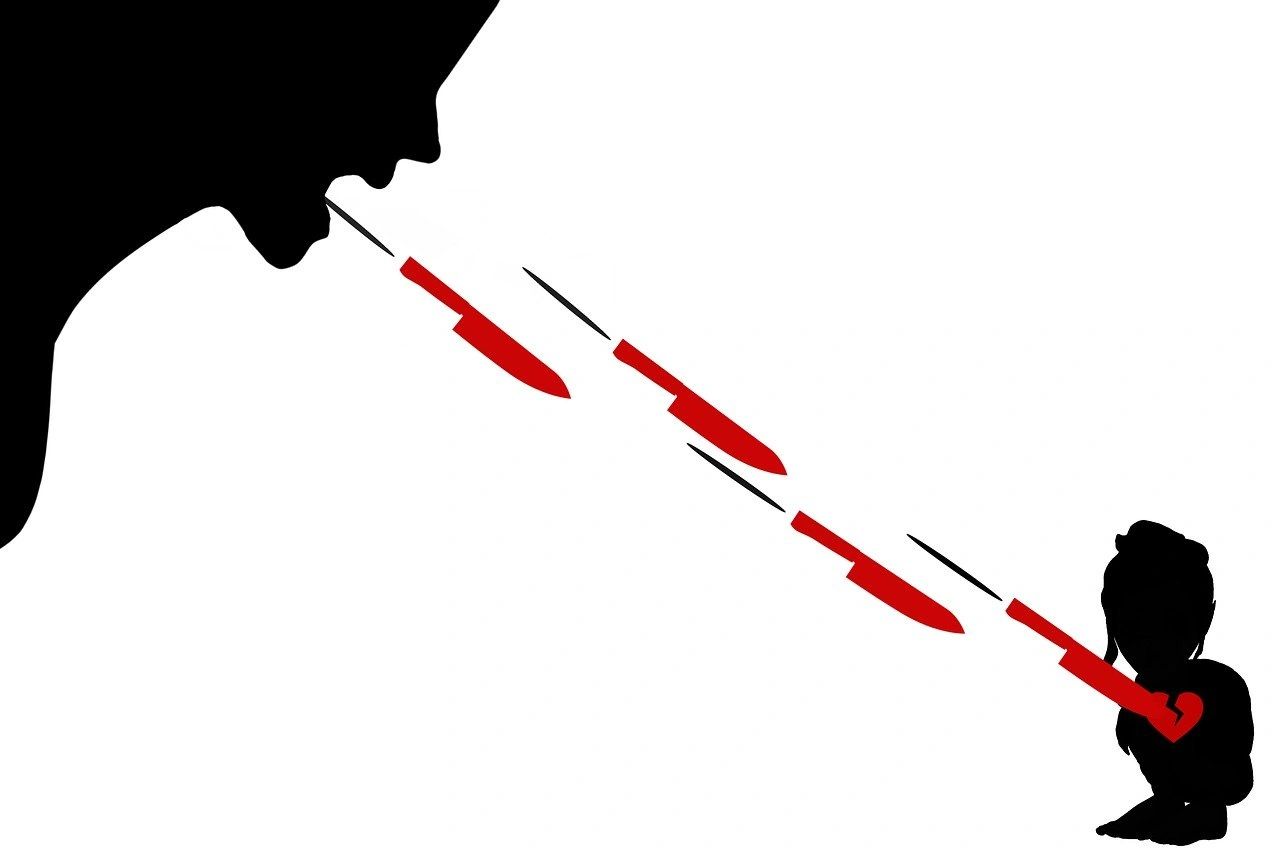
Maybe you have known this pain. Maybe you know how painful it is to be kicked out of your own family. To be disowned. To have your own family reject you forever. Maybe you know how painful it is to suddenly have all communication severed with the people who mean the most to you in life. It feels like death. It feels like you have just had the people who are most dear to you cut your throat and leave you to die in the gutter.
For some who have suffered unjustly at the hands of Christian leaders, the pain of these deep wounds may last a lifetime unless they can find a way to receive God’s healing for those hurts.
Cutting people off, rejecting them, and removing them from fellowship is like murder, because it is intentionally killing meaningful relationships.
Maybe that’s why God’s punishment for this is so severe.
Offending the Little Ones
Jesus warned us in the most severe terms not to offend the little ones among us.
His warnings are very appropriate because many times, people are kicked out of churches and ministries because of wrong behavior that is not a result of an evil nature, but because of immaturity. These people are not evil tares among the wheat. They are just spiritually immature children.
Can you imagine throwing a child out of a family for wetting the bed?
Sure, the behavior is not socially acceptable, but if leaders can care for these immature believers with patience, eventually these little ones can learn to stop offending their elders, and maybe one day they can become elders themselves.
“Love is always patient”—1 Corinthians 13:4 (ISV)
But what if these immature believers continue to poop or wet their pants in public, and you are responsible for cleaning up their messes? What if they continue to do things that the elders find inappropriate, irritating, or offensive?
That was Peter’s question to Jesus.
Then Peter came to him and asked, “Lord, how often should I forgive someone who sins against me? Seven times?”
“No, not seven times,” Jesus replied, “but seventy times seven!”— Matthew 18:21-22 (NLT)
The entire chapter of Matthew 18 is really a guidebook of wisdom for leaders in how to deal with believers who demonstrate immature and inappropriate behavior. Leaders should meditate on the truths that Jesus explains in this chapter. Leaders should never be allowed to address inappropriate behavior among church members without being thoroughly committed to the principles of Matthew 18.
In this chapter, Jesus sternly cautions us not to look down on the most vulnerable and immature people among us. We must not even entertain negative thoughts about them.
“Beware that you do not despise or feel scornful toward or think little of one of these little ones, for I tell you that in heaven their angels always are in the presence of and look upon the face of My Father Who is in heaven.”—Matthew 18:10 (AMPC)
Jesus wants us to know that He takes the treatment of immature believers very personally.
“And whoever receives and accepts and welcomes one little child like this for My sake and in My name receives and accepts and welcomes Me.”—Matthew 18:5 (AMPC)
Imagine how it impacts Jesus when we falsely label these immature believers as evil tares and cast them out of our fellowships, tossing them out like worthless trash and leaving them to fend for themselves after we have deeply hurt them?
Actually, we don’t have to imagine the impact of these actions because Jesus tells us bluntly about the consequences of these actions in the very next verses.
“But whoso shall offend one of these little ones which believe in me, it were better for him that a millstone were hanged about his neck, and that he were drowned in the depth of the sea.
“Woe unto the world because of offences! for it must needs be that offences come; but woe to that man by whom the offence cometh!”—Matthew 18:6-7 (KJV)
Do you realize what Jesus is saying here?
If we offend an immature believer, possibly causing him to lose faith and enter into sin, we would be better off dying a quick death than to face God’s judgment for those actions.
Jesus looks ahead at the consequences that we will face because of our heartless actions against these immature believers who didn’t really matter much to us, and Jesus says that we would be better off dying a quick death than to reap the consequences that we have sown by our actions against these precious people that Jesus died for.
Let that sink in.
I have watched this scenario play out multiple times.
I have watched Christians die slow, painful deaths, tortured by diseases and misguided medical treatments, after mistreating younger, immature believers who were under their care. Years after inflicting painful trauma on the young believers within their spheres of influence, these Christian offenders often developed diseases in which the cells of their own bodies were attacking each other. No amount of pleading prayers of intercession was able to raise these Christians from their death beds. Because there was no repentance for the trauma they had inflicted on young, weak believers, it would have been much better for them to have been drowned in the depths of the sea, as Jesus said.
I know of one man whose doctor told him that he should hope and pray that he died quickly of infection or pneumonia or of some lesser illness because the particular kind of cancer that he had would eventually cause the bones of his skeleton to decompose and crumble while he was still alive. The pain of that would be unbearable.
I know of another Christian leader who suffered a debilitating stroke. After she finally regained the ability to speak, she begged forgiveness from the younger believer she had looked down on and offended so deeply. Her stroke had occurred so quickly after her offense that she was able to realize that these two things were connected as a cause and effect.
I am sure that these Christians would much rather have had someone tie a millstone to their necks and toss them into the sea so that they could die quickly and all of their suffering would be over.
Sins against the Body of Christ often seem to result in diseases that attack the bodies of the offenders. When there is no repentance, God’s judgment is just and appropriate. The punishment fits the crime. If we attack the Body of Christ, we should not be surprised if we develop diseases in which our own body’s cells attack each other, just as we attacked other members of the Body of Christ.
Sins against the Body of Christ are a major reason for premature deaths, as Paul tells us in 1 Corinthians 11:
“For if you eat the bread or drink the cup without honoring the body of Christ, you are eating and drinking God’s judgment upon yourself. That is why many of you are weak and sick and some have even died.”—1 Corinthians 11:29-30 (NLT)
If I offend a weak, immature believer, and that believer cries out to God for justice, it is very possible that my days are numbered at that point. I might possibly find mercy if I sincerely repent and beg God and beg that young believer for forgiveness. Otherwise, I need to have my affairs in order and do my best to make sure that my family will be cared for after I am gone. It may only be a matter of time for me.
Paul was committed to make any sacrifice necessary to avoid offending weaker brothers and sisters.
“But you must be careful so that your freedom does not cause others with a weaker conscience to stumble. For if others see you—with your ‘superior knowledge’—eating in the temple of an idol, won’t they be encouraged to violate their conscience by eating food that has been offered to an idol?** **So because of your superior knowledge, a weak believer for whom Christ died will be destroyed. And when you sin against other believers by encouraging them to do something they believe is wrong, you are sinning against Christ. So if what I eat causes another believer to sin, I will never eat meat again as long as I live—for I don’t want to cause another believer to stumble.”—1 Corinthians 8:9-13 (NLT)
“So let’s stop condemning each other. Decide instead to live in such a way that you will not cause another believer to stumble and fall.
“I know and am convinced on the authority of the Lord Jesus that no food, in and of itself, is wrong to eat. But if someone believes it is wrong, then for that person it is wrong. And if another believer is distressed by what you eat, you are not acting in love if you eat it. Don’t let your eating ruin someone for whom Christ died. Then you will not be criticized for doing something you believe is good.** For the Kingdom of God is not a matter of what we eat or drink, but of living a life of goodness and peace and joy in the Holy Spirit. If you serve Christ with this attitude, you will please God, and others will approve of you, too. So then, let us aim for harmony in the church and try to build each other up.**
“Don’t tear apart the work of God over what you eat. Remember, all foods are acceptable, but it is wrong to eat something if it makes another person stumble.** It is better not to eat meat or drink wine or do anything else if it might cause another believer to stumble.** You may believe there’s nothing wrong with what you are doing, but keep it between yourself and God.”—Romans 14:13-22 (NLT)
Discipline and Restoration
We do not have the freedom to pick and choose who we allow to stay in our churches. We are NEVER allowed to excommunicate people from our fellowship for any reason except refusal to repent of specific sins. Even then, we must give the accused person due process, as Jesus described in Matthew 18:15-17. We are NEVER allowed to remove people from our fellowships just because we think they are “bad people.” We only are allowed to address specific sins. If we cannot articulate specific sins that the person has committed, we have no basis for removing a person from our fellowship.
If someone in our fellowship commits a specific sin, this is the procedure that Jesus commanded us to follow in Matthew 18:15-17 (ESV):
-
“If your brother sins against you, go and tell him his fault, between you and him alone. If he listens to you, you have gained your brother.”
-
“But if he does not listen, take one or two others along with you, that every charge may be established by the evidence of two or three witnesses.”
-
“If he refuses to listen to them, tell it to the church. And if he refuses to listen even to the church, let him be to you as a Gentile and a tax collector.”
Sin must be addressed in our churches, of course, and if there is a firm refusal to repent, then the sinners must be removed from our fellowships, as the Apostle Paul clearly stated in 1 Corinthians chapter 5.
“It isn’t my responsibility to judge outsiders, but it certainly is your responsibility to judge those inside the church who are sinning. God will judge those on the outside; but as the Scriptures say, ‘You must remove the evil person from among you.’”—1 Corinthians 5:12-13 (NLT)
But if you remove someone from your fellowship because of a refusal to repent of specific sins, that is not the end of the story. You are still responsible for that person, even after he or she has been removed from your fellowship.
“Obey your [spiritual] leaders and submit to them [recognizing their authority over you], for they are keeping watch over your souls and continually guarding your spiritual welfare as those who will give an account [of their stewardship of you].”—Hebrews 13:17 (AMP)
If a person makes a decision to leave your fellowship, then you are no longer responsible for their spiritual welfare, because it was their choice to leave, not yours. But if you take action to remove a person from your fellowship, then you are still responsible for that person, because it was your decision to remove them.
We are never allowed to throw people out of our fellowships like pieces of trash and forget about them. We must follow up with those people. Scripture commands it.
When I worked for the public schools, we never expelled students without continuing to provide educational services to them. Even if a student brought a gun to school, or committed other serious offenses, we were responsible to continue to provide educational services, even if the student was in jail, in the hospital, or in some other institution. We were still responsible for that student’s educational welfare.
If you remove a person from your fellowship because of a refusal to repent of specific sins, you MUST have a plan to restore that person to fellowship after they repent, and you must follow through on that plan. That means that you cannot completely cut off your relationship with that person. You must continue to communicate with that person, if only to determine whether or not they are ready to repent and be restored to fellowship.
“Brethren, if any person is overtaken in misconduct or sin of any sort, you who are spiritual [who are responsive to and controlled by the Spirit] should set him right and restore and reinstate him, without any sense of superiority and with all gentleness, keeping an attentive eye on yourself, lest you should be tempted also.”—Galatians 6:1 (AMPC)
In one incident of specific sin, Paul guided the Corinthian church in how to deal with it. When that church member repented, Paul also guided the church in the process of completely restoring that brother to fellowship. His wise counsel also serves as a guide for us.
“But if someone [the one among you who committed incest] has caused [all this] grief and pain, he has caused it not to me, but in some measure, not to put it too severely, [he has distressed] all of you.
“For such a one this censure by the majority [which he has received is] sufficient [punishment].
“So [instead of further rebuke, now] you should rather turn and [graciously] forgive and comfort and encourage [him], to keep him from being overwhelmed by excessive sorrow and despair.
“I therefore beg you to reinstate him in your affections and assure him of your love for him;
“For this was my purpose in writing you, to test your attitude and see if you would stand the test, whether you are obedient and altogether agreeable [to following my orders] in everything.
“If you forgive anyone anything, I too forgive that one; and what I have forgiven, if I have forgiven anything, has been for your sakes in the presence [and with the approval] of Christ (the Messiah),
“To keep Satan from getting the advantage over us; for we are not ignorant of his wiles and intentions.”—2 Corinthians 2:5-11 (AMPC)
If the offender was involved in ministry, they might not be restored to a ministry position, but they should be restored to the fellowship of believers, if and when they repent.
Scattering the Sheep
In the parable of the Wheat and the Tares, the servants asked their master, “Do you want us to go and pull up the weeds?”
“He answered, ‘No, because when you pull up the weeds, you might also pull up the wheat. Let the weeds and the wheat grow together until the harvest time. At the harvest time I will tell the workers this: First, gather the weeds and tie them together to be burned. Then gather the wheat and bring it to my barn.’”—Matthew 13:28-30 (ERV)
Jesus has a master plan for dealing with the bad seeds as well as the good seeds. He will command His angels to separate the bad seeds from among us at the proper time. That is not our job.
Our job is to love the people that God sends our way. Our job is not to judge people, condemn them, or kick them out of our fellowships.
We must realize that if we are not working with God, cooperating with Him to gather in the harvest according to His ways and His timeline, we may be working against Him. And if we take it upon ourselves to start weeding out the “bad seeds” from our fellowships, we will inevitably scatter the harvest.
“If you are not on my side, you are against me. If you don’t gather in the harvest with me, you scatter it.”—Matthew 12:30 (CEV)
When we take it upon ourselves to toss people out of our fellowships like worthless pieces of trash, we place ourselves squarely in God’s crosshairs. We bring down judgment upon ourselves.
“Woe to the shepherds who are destroying and scattering the sheep of My pasture!” says the Lord. Therefore thus says the Lord, the God of Israel, in regard to the shepherds who care for and feed My people: “You have scattered My flock and driven them away, and have not attended to them; hear this, I am about to visit and attend to you for the evil of your deeds,” says the Lord. “Then I will gather the remnant of My flock out of all the countries to which I have driven them and bring them back to their folds and pastures; and they will be fruitful and multiply. I will set up shepherds over them who will feed them. And they will not be afraid any longer, nor be terrified, nor will any be missing,” says the Lord.—Jeremiah 23:1-4 (AMP)
We must realize that when we remove people from our fellowship, we also remove their protection. Can you imagine what might happen to your children if you threw them out into the streets, locked them out of your house, and told them, “You’re not welcome here anymore. You won’t get any more help from us.”?
If those children survived to adulthood, the traumas they might experience along the way could wound them for life!
It’s no wonder that our Lord shows very little mercy to the shepherds who do these things to his sheep.
And the word of the Lord came to me, saying, “Son of man, prophesy against the shepherds of Israel. Prophesy and say to them, the [spiritual] shepherds, ‘Thus says the Lord God, “Woe (judgment is coming) to the [spiritual] shepherds of Israel who have been feeding themselves! Should not the shepherds feed the flock?** You eat the fat [the choicest of meat], and clothe yourselves with the wool, you slaughter the best of the livestock, but you do not feed the flock. You have not strengthened those who are weak, you have not healed the sick, you have not bandaged the crippled, you have not brought back those gone astray, you have not looked for the lost; but you have ruled them with force and violence. They were scattered because there was no shepherd, and when they were scattered they became food for all the predators of the field. **My flock wandered through all the mountains and on every high hill; My flock was scattered over all the face of the earth and no one searched or sought them.”’”—Ezekiel 34:1-6 (AMP)
Christian leaders may feel that the suffering that these sheep experience is justified because there was sin in their lives, but this grieves the Lord.
“My people were lost sheep; their shepherds led them astray; they deserted them on the mountains, where they wandered off among the hills, forgetting their resting place. All who found them devoured them; and their attackers said, ‘It’s not our fault, because they have sinned against the Lord, the true pasture, the hope of their ancestors—the Lord.’”—Jeremiah 50:6-7 (CEB)
We must realize, as God tells us in Ezekiel 34, that we are still responsible for the sheep that God has placed in our care, even if we have cut them off from fellowship with us. Unless we take responsibility for the sheep that God has placed in our care, God may remove us from the ministry.
Therefore, you [spiritual] shepherds, hear the word of the Lord:** “As I live,” says the Lord God, “certainly because My flock has become prey, My flock has even become food for every predator of the field for lack of a shepherd, and My shepherds did not search for My flock, but rather the shepherds fed themselves and did not feed My flock; therefore, you [spiritual] shepherds, hear the word of the Lord: **‘Thus says the Lord God, “Behold, I am against the shepherds, and I will demand My flock from them and make them stop tending the flock, so that the shepherds cannot feed themselves anymore. I will rescue My flock from their mouth, so that they will not be food for them.”’”—Ezekiel 34:7-10 (AMP)
God is the Good Shepherd. Even if our ministers abuse us, mistreat us, label us as “bad seeds” and kick us out of their fellowships, God will never leave us or forsake us.
“When my father and my mother forsake me, Then the Lord will take care of me.”—Psalm 27:10 (NKJV)
If our ministers forsake us, abandon us, disown us, the Lord is still faithful. If our shepherds will not care for us, then the Lord Himself will step in and care for us Himself, taking upon Himself the role of our personal Good Shepherd!
For thus says the Lord God, “Behold, I Myself will search for My flock and seek them out. As a shepherd cares for his sheep on the day that he is among his scattered flock, so I will care for My sheep; and I will rescue them from all the places to which they were scattered on a cloudy and gloomy day.** I will bring them out from the nations and gather them from the countries and bring them to their own land; and I will feed them on the mountains of Israel, by the streams, and in all the inhabited places of the land. I will feed them in a good pasture, and their grazing ground will be on the mountain heights of Israel. There they will lie down on good grazing ground and feed in rich pasture on the mountains of Israel. I will feed My flock and I will let them lie down [to rest],” says the Lord God. **“I will seek the lost, bring back the scattered, bandage the crippled, and strengthen the weak and the sick; but I will destroy the fat and the strong [who have become hard-hearted and perverse]. I will feed them with judgment and punishment.”—Ezekiel 34:11-16 (AMP)
Where are the shepherds after God’s own heart?
Where are the shepherds who will lay down their lives for the welfare of the sheep?
“I am the good shepherd. The good shepherd sacrifices his life for the sheep.”—John 10:11 (NLT)
As Christian leaders, we must have a change of heart!
We must have our eyes opened to see the sheep as God sees them. We must look past the problems that some immature and misguided sheep are causing and instead see the incredible value of each individual that God brings our way.
Instead of focusing on removing people that cause problems, we must commit ourselves to restore those who have been scattered, working with God to gather the harvest.
So Jesus told them this story:** “If a man has a hundred sheep and one of them gets lost, what will he do? Won’t he leave the ninety-nine others in the wilderness and go to search for the one that is lost until he finds it? And when he has found it, he will joyfully carry it home on his shoulders. When he arrives, he will call together his friends and neighbors, saying, ‘Rejoice with me because I have found my lost sheep.’ **In the same way, there is more joy in heaven over one lost sinner who repents and returns to God than over ninety-nine others who are righteous and haven’t strayed away!”—Luke 15:3-7 (NLT)