Violating People Spiritually - Part 4
Watch Their Reactions
I still remember this encounter vividly—not because of what was said, but because of the physical reactions of the two ladies we encountered.
Our outreach team was walking through a clothing store. As we passed by two employees, I thought about stopping to talk with them, but we kept walking. The employees were chatting with each other enthusiastically, and I wasn’t sure if they would welcome an interruption.
We decided to take a chance and walk back towards them to see if they might be open to a conversation. As we walked towards the two ladies, I suddenly felt very strongly that they were closed to any encounter with God at that moment, but it was too late. A team member approached and asked a question that we often use as a conversation starter.
“Hey, can I ask you a question?”
The employees looked up.
“We’re learning how to interpret dreams, and we were just wondering if you’d had any dreams that you wouldn’t mind sharing with us.”
As soon as he mentioned the word “dreams,” one of the ladies started walking backwards, away from us to put more distance between us. It was obvious that she was uncomfortable.
The other lady picked up the pile of clothes she was working with and walked to the racks, turning her back to us.
Their body language was clear. They didn’t have to say anything. Our team member asked a couple more questions, but the encounter was done before it started. We never should have approached those two ladies, but after we realized our mistake, thankfully, we didn’t prolong the encounter by trying to force the issue.
I feel like I am getting better at discerning who is open to spiritual encounters and who is not, but I’ve learned also that it is important for me to continue to monitor their reactions *during *each encounter, so that I do not push beyond their comfort zone. I certainly do not want to be guilty of violating anyone spiritually.
In every encounter, people give us a certain level of favor to engage with them. John Paul Jackson taught us that when we take the initiative to approach someone, we are often given a relatively small level of favor to impact their lives initially. That favor can grow if they like what we bring to the encounter, and they want to know more. Then they can look on us more “favorably.” In those situations, we will be allowed more freedom to speak into their lives and to engage with them.
But in the encounter with the two ladies in the store, we were given very little favor initially, and even the small amount of favor we were given to initiate the encounter was soon taken away. As soon as the topic of dreams was introduced, they began to look on us “unfavorably.” Whatever favor we had been granted to start the conversation was quickly withdrawn. Spiritually, the door was closed. The walls were up. Game over. That encounter was going nowhere.
**It is so important for us to learn to discern the level of favor that people are giving us to impact their lives, and not to go beyond the favor we are given! **
Thinking back to what I had been told about Ginger’s reaction at the other store … that at one point, as our team members were talking with Ginger, she had suddenly announced that she was starting to feel uncomfortable with the interaction from our team, and had picked up her things and retreated into the back room. It seemed obvious to me now that someone in our group had gone beyond the favor that Ginger had given us to speak into her life and to engage with her.
What is really scary to me is that, if people are walking away from us, and retreating behind closed doors to get away from us, who else are they closing the door on?
Is our pushy behavior also causing people to close the door on God?
We are told in 2 Corinthians 5:20 that we are Christ’s ambassadors in the Earth. We are His direct representatives. So, if people are closing the door on us, they may be also closing the door on God. That is the scariest part of all of this. If we do not represent God well in our encounters with people, and we cause them to reject us unnecessarily, our encounters could cause people to reject God as well.
It all goes back to Jesus’ word to us in Matthew 12:30:
“Anyone who does not gather sheep with me scatters them.” (NIRV)
We’ve got to become very sensitive to the reactions of people. We have to be attentive to their body language as well as their tone of voice. We must notice how they react to us with their facial expressions as well as their words. Do they physically step back or turn away from us? Do they seem genuinely interested, or are they just being polite until they can find an excuse to get away?
If they are uncomfortable in the encounter, they will almost always retreat into “self-protection mode.” Invisible walls of protection will go up. They will become very guarded, keeping their true selves hidden behind their personal barriers of protection. They will not be open to receive what God may have for them in the encounter, and any opportunity to impact their lives with the love and power of Jesus may be lost.
We must realize that No means No! If we push beyond the favor people give us in our encounters with them, and we try to force the issues, we can be in danger of violating them spiritually and pushing them further away from Jesus.
We must honor their wishes. If we ask if they have had dreams and they say no, it may be counterproductive to press them by saying “Really? Are you sure? Maybe a dream when you were a child? Haven’t you had at least one dream that you can remember?”
And for our own sakes, it is important that we develop our sensitivity to the responses of others and really listen to them. If we don’t, we could lose that ability altogether.
Jesus taught us this principle in Matthew 13:12:
“to anyone who has something, more will be given, and he will have more than enough. But from the one who doesn’t have anything, even what he has will be taken away from him.” (ISV)
If we don’t use it, we lose it.
I believe this happens to people all the time. Among the people who are experiencing severe hearing loss today, there are some who never really listened to the people in their lives. Eventually, after a lifetime of not listening to people, they lost the ability to hear them.
Protect the Seed
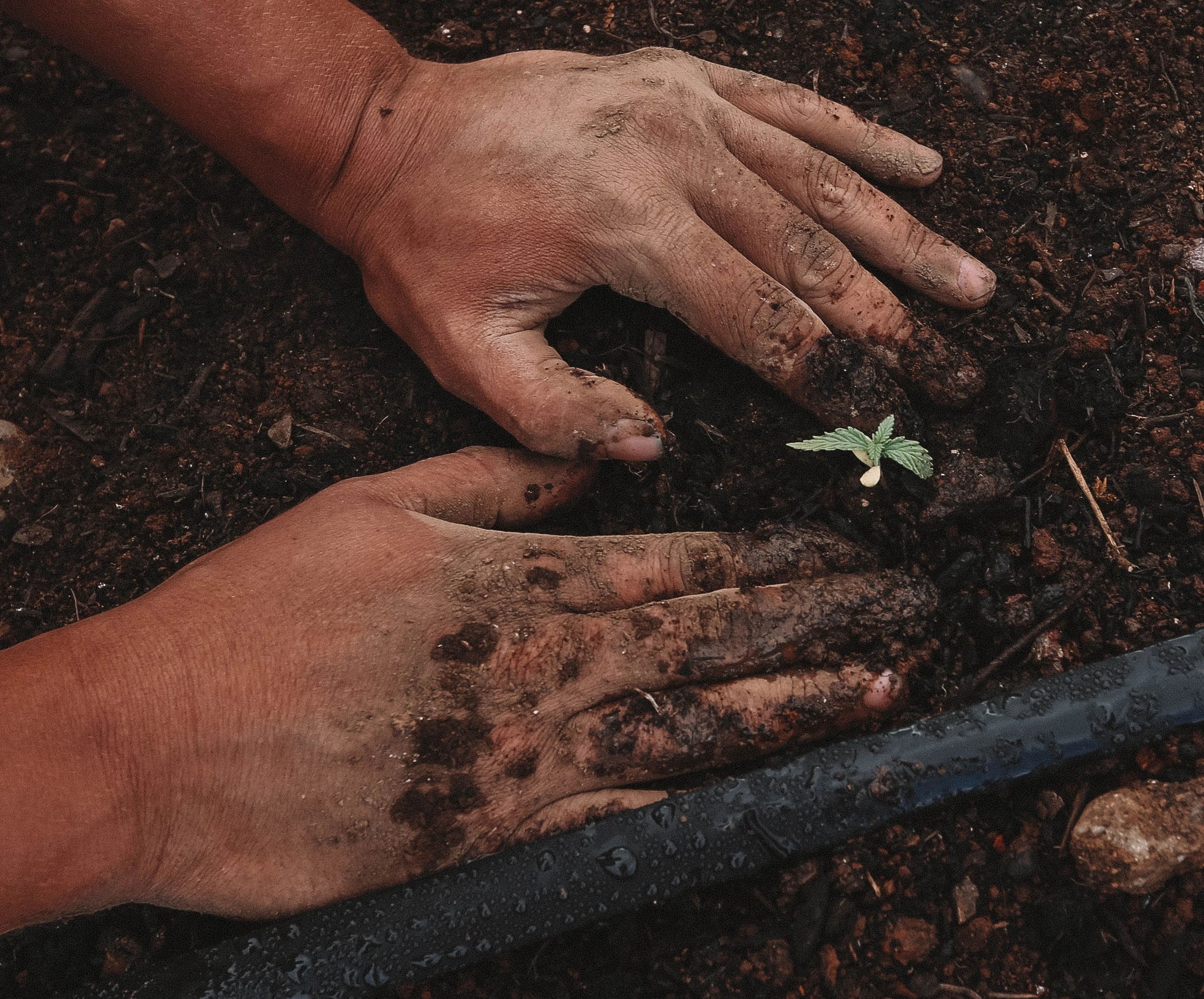
Jesus gave us two metaphors for salvation. Both of them involve seeds.
Salvation is described as a harvest, and also as a new birth.
In both cases, the seed of new life comes from God and must be allowed to grow and develop through a process before it is ready to be harvested or born.
“For you have been born again, not by a seed that perishes but by one that cannot perish—by the living and everlasting word of God.”—1 Peter 1:23 (ISV)
Traditional evangelistic approaches have taught us that salvation is merely a mental decision that people can come to at any time in their lives, and so why not today? In fact, there is no better time than today, because what if you die tonight?
These traditional approaches to evangelism are based on a fundamental misunderstanding of what salvation actually is. Salvation is the culmination of a process that takes time—usually months; sometimes years—between the time the seed of the Word of God is sown in a person’s heart and the actual birth or harvest of the fruit of that seed. Between conception and birth is a long pregnancy period when the seed is growing the heart of the pre-believer.
When we understand this, then we will begin to understand why Jesus never pushed anyone to make an urgent profession of faith or a commitment to follow Him. He prompted people when He discerned that their hearts were ready, but He never pushed or pressured anyone.
Remember the encounter with Nicodemus? After Jesus had taken time to explain that a person must be born again in order to see the Kingdom of God, He did not put any pressure on Nicodemus to make a decision at that time. At the end of that encounter, as far as we can tell, they just went their separate ways. The seed was sown in the heart of Nicodemus, but it was not ready to bring to birth yet. It needed time to grow.
When we realize that salvation is the fruit of a long growth process after the seed of God’s word has been planted in a person’s heart, then we will have patience, as Jesus did, to allow people to come to Jesus on their own timetable, when the fruit is ripe, so to speak.
It is when we try to force people to make a decision for Christ before they are ready that we violate them spiritually. In doing this, we can actually kill the seed that is growing in their hearts.
Natural pregnancy and birth gives us a picture of what takes place in a spiritual pregnancy and new birth.
During a natural pregnancy, greater care must be given to the mother in order to protect the new life that is growing inside of her.
If someone forcibly tries to take a woman’s baby before it is ready to survive outside of the womb, that puts the life of the baby at great risk. Even if the baby is born prematurely, its life is at greater risk than if it was born at full term. Greater care must be given to ensure that this new life survives.
Imagine that you visit a young pregnant woman with a group of friends. During the course of your conversation, one of these friends turns to you and says, “We need to take the baby. You need to help us take the baby.”
Then, to your horror, you watch as these friends try to convince this young pregnant woman to cooperate with them as they try to forcibly take the baby from her body.
You realize that these friends sincerely believe that they are doing what is best for the unborn baby and the mother, but the mother is in obvious distress as these friends try to forcibly bring the baby to birth prematurely.
This is exactly what we do to people spiritually when we try to force them to make a decision for Christ before they are ready. We may believe that we are doing what is best for this person, but in reality, even if they say a sinner’s prayer and verbally confess Jesus as their savior because of our high-pressure approach, in the end, it can result in tragedy.
The confession of faith may sound genuine, but because it was forced, and it was not the pre-believer’s decision at all but it was the evangelist’s decision, the commitment is not real. The seed that was sown in their hearts may have suffered irreparable damage, and the pre-believer may be pushed further away from Jesus than ever before.
In the end, using a high-pressure evangelistic approach may bring us into agreement with Satan’s goal to snatch the seed from the pre-believer’s heart, as in the parable of the sower.
Traditional, high-pressure evangelistic approaches have caused many of these kinds of spiritual abortions.
Instead of increasing pressure, we must follow Jesus’ example and patiently allow people the time they need for the seed of God’s word to grow in their hearts to full maturity.
It might be helpful to think of ourselves more as spiritual midwives offering patient, loving care until the person is ready for the new birth. And when they let us know they are ready, then we can assist them in that new birth.
We see this same process of salvation in the lessons that Jesus taught us about the seed that is first sown in the ground and then harvested months later.
“Jesus also said, ‘The Kingdom of God is like a farmer who scatters seed on the ground. Night and day, while he’s asleep or awake, the seed sprouts and grows, but he does not understand how it happens. The earth produces the crops on its own. First a leaf blade pushes through, then the heads of wheat are formed, and finally the grain ripens. And as soon as the grain is ready, the farmer comes and harvests it with a sickle, for the harvest time has come.’”—Mark 4:26-29 (NLT)
Jesus clearly teaches us here that, after the seed of God’s word is sown, the seed grows naturally on its own, as it was designed to do by God. While the seed is growing in the soil, the farmer’s main responsibilities are to support the growth of the seed and to make sure nothing interferes with its growth, like weeds or pests.
The experienced farmer understands that growth of the seed takes time. It is a process. As Jesus said, “First the stalk comes up. Then the head appears. Finally, the full grain appears in the head.” (Mark 4:28 NIRV)
It would be ridiculous for the farmer to try to hurry the process along by going out into his field to reap the harvest before the grain had even appeared on the plants. There would be no fruit to harvest! Thrusting in the shovel prematurely to dig up the seeds that had been planted would not yield any fruit, and it would likely kill the plants, snatching the seeds from the ground, just like the work of the devil in the parable of the sower.
The process of seed growth cannot be hurried. It must be allowed to grow at its own pace and to ripen in its own time. The farmer has to wait patiently for the fruit to ripen. This is what James tells us:
“See how the farmer waits for the precious fruit of the earth, waiting patiently for it until it receives the early and latter rain.”—James 5:7 (NKJV)
If we are to be the reapers that God needs in His harvest, we must treat the seeds with patient care as the farmer who waits patiently for the seeds to grow and bear fruit.
We learn from the parable of the sower that the seed of God’s word needs to be allowed to be planted deeply in good soil and protected from harm in order to produce the best fruit. (See Matthew chapter 13; Mark 4; and Luke 8.)
Until the fruit is ripe and a person is ready, at their own pace, to receive salvation, maybe we should consider our roles to be “seed protectors” in the lives of those we encounter, protecting the seed of God that has already been planted in their hearts, offering kindness and nurturing care when it is appropriate.