A Deeper Dive Into the Book of Revelation - Part 28
Naomi’s Return to Israel
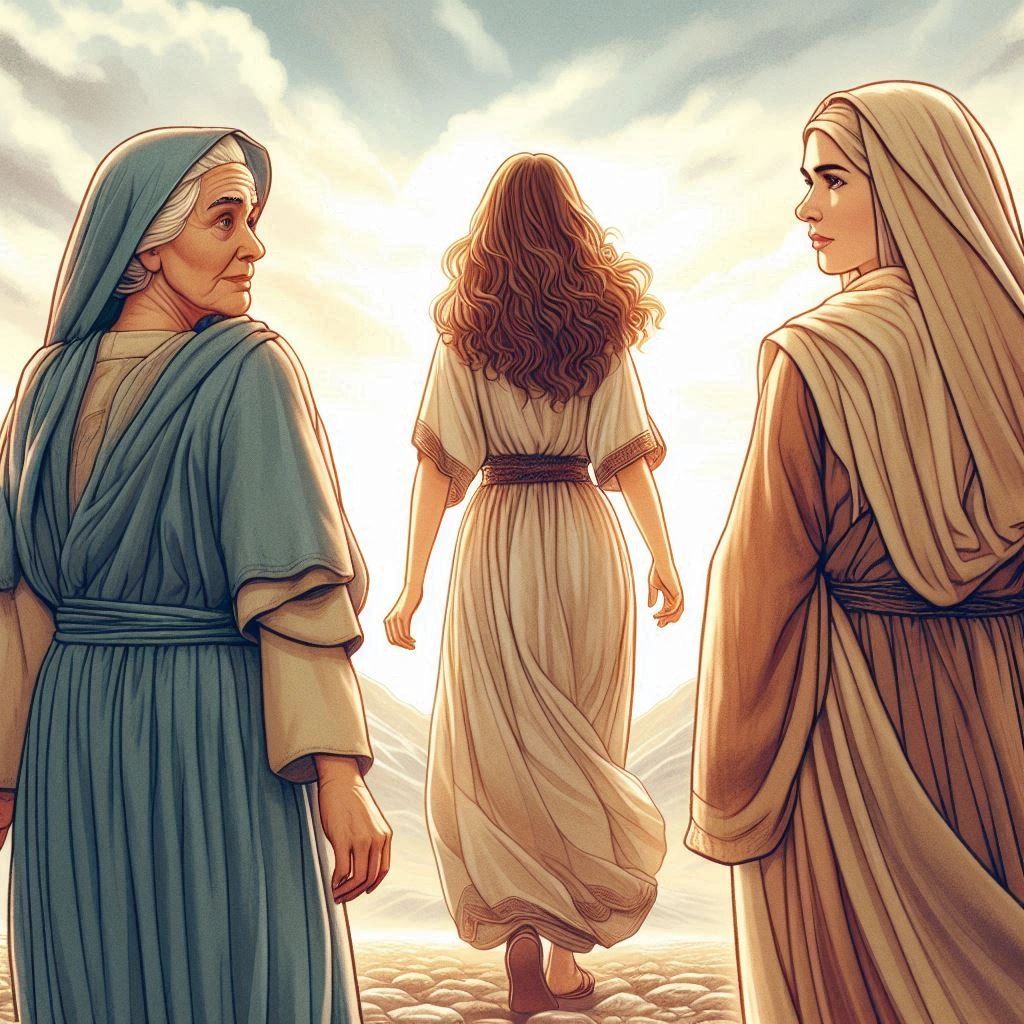
Continuing on with the story of Ruth, God gives us some good insights into the three groups of believers represented by Naomi, Orpah, and Ruth.
After the deaths of their husbands, Naomi heard “how the Lord had taken care of His people [of Judah] in giving them food” (Ruth 1:6 AMP), and so she decided to go back to the land that God had given to His people. Naomi and her husband had walked away from the place of God’s calling and provision, but now that circumstances seemed more favorable for her, she decided to go back to the land of God’s calling.
This shows us something about Naomi’s relationship with God. There seems to be something lacking in her dedication to the Lord. Her actions seem to show that she doesn’t fully trust God with her life. When things aren’t going her way, she takes matters into her own hands and goes her own way. She doesn’t trust in the Lord with all her heart, but she leans more heavily on her own understanding, contrary to what we are taught in Proverbs 3:5.
Orpah Falls Away
“She left the place where she had been living. Her daughters-in-law went with her. They started out on the road that would take them back to the land of Judah.”—Ruth 1:7 (NIRV)
For Naomi, the trip to the land of Judah will be a *return *trip, but for Ruth and Orpah, who are new to the things of God, this will be their first trip to the land of God’s people. This is all new to them. They are like new believers who are just discovering the things of God, and now they are going to follow a more mature believer to the land of God’s people. There is a lot of symbolism here about new believers (Orpah and Ruth) being introduced to the things of God by a more mature believer (Naomi).
But Naomi does not fully trust God, and it shows in the advice that she gives to her daughters-in-law:
“But Naomi said to her two daughters-in-law, ‘Go back, each of you return to your mother’s house. May the Lord show kindness to you as you have shown kindness to the dead and to me. May the Lord grant that you find rest, each one in the home of her husband.’
“Then she kissed them [goodbye], and they wept aloud. And they said to her, ‘No, we will go with you to your people [in Judah].’
“But Naomi said, ‘Go back, my daughters, why should you go with me? Do I still have sons in my womb that may become your husbands? Go back, my daughters, go, for I am too old to have a husband. If I said I have hope, and if I actually had a husband tonight and even gave birth to sons, would you wait until they were grown? Would you go without marrying? No, my daughters; for it is much more difficult for me than for you, because the Lord’s hand has gone against me.’”—Ruth 1:8-13 (AMP)
Far from encouraging these two young ladies, Naomi discourages them from continuing on their journey to the land of God’s people. Symbolically, this would represent a bitter and unforgiving Christian discouraging new believers in their walk with the Lord because of her own painful experiences. Naomi actually becomes a stumbling block in the lives of these two young ladies who are new to the faith and are just setting out on their journey to the promised land of God’s people.
This is very serious. Paul exhorts us to resolve that we will never do anything that might cause another believer to stumble in their walk with God.
“Therefore let us stop passing judgment on one another. Instead, make up your mind not to put any stumbling block or obstacle in the way of a brother or sister.”—Romans 14:13 (NIV)
In Jesus’ evaluation of the church in Pergamum, He called them out for allowing some people in their congregation to put stumbling blocks in the paths of sincere believers.
“But I have a few things against you, because you have there some [among you] who are holding to the [corrupt] teaching of Balaam, who taught Balak to put a stumbling block before the sons of Israel”—Revelation 2:14 (AMP)
Symbolically, Naomi is actually discouraging these new believers from pursuing their journey with the Lord because she is still bitter over her own painful experiences.
“Don’t do this thing. My life is much too sad for you to share. This is because the Lord is against me!”—Ruth 1:13 (ICB)
She blames the Lord for her misfortunes, even though she brought them all upon herself. God didn’t tell her to go to Moab. She took it upon herself to leave the land of God’s people. She voluntarily waked away from the place of God’s provision and protection.
The Lord is not against Naomi, but since she blames God for her problems, she has deceived herself into believing that God is angry and vengeful rather than loving and caring. Now she is seeing God through a distorted lens. She is seeing God as something that He is not, and because of this, Naomi is discouraging her daughters-in-law from continuing on their journey to the land of God’s people.
This little bit of discouragement was all that it took for Orpah to turn back and symbolically end her relationship with the Lord.
“The women cried together again. Then Orpah kissed Naomi good-bye”—Ruth 1:14 (ICB)
True to the meaning of her name, Orpah turned back and, like a gazelle, ran away from a perceived threat after listening to Naomi mischaracterize God as angry and vengeful. Orpah turned back, abandoning the true God and going back to her old lifestyle among the unbelievers in Moab. As Naomi said to Ruth, “Look, your sister-in-law has gone back to her people and to her gods” (Ruth 1:15 AMP).
Orpah represents the “stony ground” believers whose faith is not deeply rooted, and this is exactly how Jesus told us that this group of believers would react in times of difficulties.
“As for what was sown on rocky ground, this is the one who hears the word and immediately receives it with joy, yet he has no root in himself, but endures for a while, and when tribulation or persecution arises on account of the word, immediately he falls away.”—Matthew 13:20-21 (ESV)
Orpah didn’t even wait until she experienced real tribulation. All it took was just a few words of discouragement from Naomi, and Orpah made the decision to abandon her journey with God’s people and go back to her old life among the unbelievers.
This same decision is made by countless Christians whose dedication to the Lord is very shallow. When difficulties arise that force them to choose, they abandon the Lord Jesus Christ and turn back to their old lifestyles and the company of unbelievers.
At the end of this age, this will happen on a world-wide scale as the pressures of the Antichrist reign and the Great Tribulation force every living believer to choose in that day whom they will serve.
“Now, brethren, concerning the coming of our Lord Jesus Christ and our gathering together to Him, we ask you, not to be soon shaken in mind or troubled, either by spirit or by word or by letter, as if from us, as though the day of Christ had come. Let no one deceive you by any means; for that Day will not come unless the falling away comes first, and the man of sin is revealed, the son of perdition, who opposes and exalts himself above all that is called God or that is worshiped, so that he sits as God in the temple of God, showing himself that he is God.”—2 Thessalonians 2:1-4 (NKJV)
“Then you will be arrested, persecuted, and killed. You will be hated all over the world because you are my followers. **And many will turn away from me **and betray and hate each other. And many false prophets will appear and will deceive many people. Sin will be rampant everywhere, and the love of many will grow cold.”—Matthew 24:9-12 (NLT)
After Orpah said goodbye to Naomi and turned back to Moab, she is never heard from again.
We see the same thing in Scripture about this “stony ground” group of believers at the end of this age. After the Great Tribulation begins, they are never heard from again.
This “Outer Court” group of believers seems to be mentioned for the last time at the beginning of Revelation chapter 11. In the first two verses of this chapter, there seems to be a very solemn moment of demarcation in which the “Holy Place” believers and the “Holy of Holies” believers are numbered, but the “Outer Court” believers are left out. At this point, their destinies are sealed.
During the Great Tribulation period, these three groups of believers will experience very different destinies.
The “Holy of Holies” group will be the “firstfruits” of the end-time harvest. They will be caught up just before the Great Tribulation and taken directly to the Lord to stand on Mount Zion in Heaven with the Son of Man. We see this in Revelation 14:1-5.
The “Holy Place” group will be the “Main Harvest” that will need to go through the “threshing floor” of Great Tribulation in order to remove the chaff and make their robes pure, clean, and white in preparation for meeting the Lord when He returns at the end of the Great Tribulation as Jesus describes to us in Matthew 24:29-31. Their harvest is seen in Revelation 14:14-16, and they appear in the next chapter, standing on the sea of glass in Heaven in Revelation 15:2.
The ”Outer Court” group, represented by Orpah, will be the “gleanings” of the end-time harvest that are left in the field. They are not harvested at all. Having fallen away from the faith and turned their backs on the Lord Jesus Christ, they should have no expectation of being gathered to meet Him when He returns.
In verse 2 of Revelation 11, just before the Great Tribulation begins, we seem to be told that these “Outer Court” believers whose hearts are not with the Lord will be left unprotected during the three and a half years of Great Tribulation.
“Exclude the outer court of the temple and do not measure it, because it has been given to the heathen. They will trample the holy city for forty-two months.”—Revelation 11:2 (EHV)
These “stony ground” believers will not receive the same protections that are described in Psalm 91 because they do not “dwell in the secret place of the Most High,” as the “Holy of Holies” believers do. These are “Outer Court” Christians who really have no desire to pursue a close relationship with the Lord.
These Christians are represented in the parable of the talents as the “wicked and lazy servant” who was cast into outer darkness in Matthew 25:30.
After this final mention in Revelation 11:2, these “stony ground” believers that Orpah represents are never heard from again.
Reference: Cummins, D. (2021). I Am Ruth Thy Handmaid. Capitol Worship.