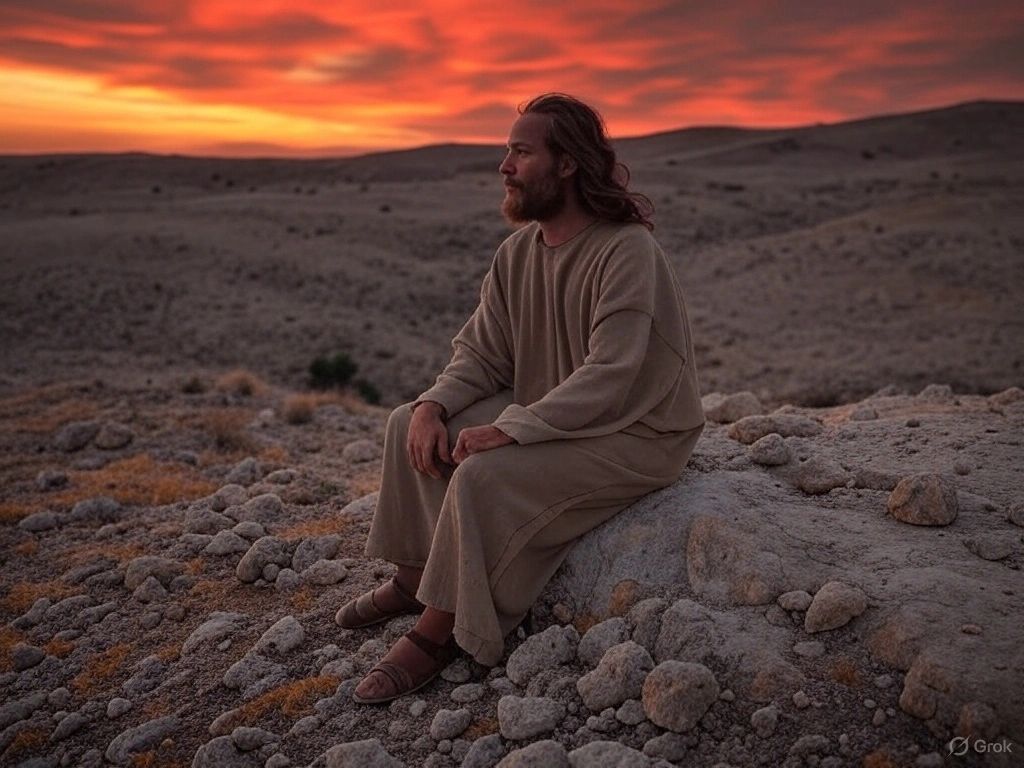
A Deeper Dive Into the Book of Revelation - Part 50
“I John, who also am your brother, and companion in tribulation, and in the kingdom and patience of Jesus Christ, was in the isle that is called Patmos, for the word of God, and for the testimony of Jesus Christ.”—Revelation 1:9 (KJV)
When John received the Revelation of Jesus Christ, he was living in exile on Patmos, a small Greek island in the Aegean Sea.
John was the last surviving original apostle. The other apostles had all been martyred by this time.
In 81 AD, the Roman Emperor Domitian sentenced John to be boiled in oil in an effort to stop John from preaching the Gospel of the Kingdom. John survived this torture with no trace of burn marks on his body.
John was also challenged to drink poison. The poison also had no effect on John, fulfilling the promise that Jesus gave to His disciples that, “If they drink anything poisonous, it will not hurt them” (Mark 16:18 CEB).
Since it seemed impossible to kill John, he was banished to the island of Patmos which was being used as a penal colony at that time.
It would be normal to wonder if John’s life was over at that point. He was not a young man any more. He had lived an extraordinary life as one of the original apostles of Jesus Christ. He had been a member of Jesus’ inner circle of trusted friends, along with Peter and James.
But what did he reasonably have to look forward to now that he had been banished in his old age to an isolated island?
Remarkably, John’s greatest years of ministry were still ahead of him! In fact, no one has ever experienced what John was about to experience as Jesus propelled him into the future, … and into an extraordinary adventure!
**John the Time Traveler **
John tells us in Revelation 1:10 that, “I was in the Spirit on the Lord’s day.” This does not mean that John was worshiping God on the sabbath. John was transported into the future to witness the “Day of the Lord” that has been prophesied in so many Bible passages from Isaiah 2:12 to 2 Peter 3:10. John suddenly found himself at the end of this Church Age, witnessing end-time events in the spirit realm.
Just when it may have seemed that John’s life was over, he was propelled into possibly the most breathtaking, extraordinary experience that has ever been recorded.
John the Writer
John was transported into the future for a very important purpose. As we are told in the first chapter of Revelation, Jesus chose John to be a witness and to record the things that he saw, and then to send those revelations to the people of God.
“[This is] the revelation of Jesus Christ [His unveiling of the divine mysteries]. God gave it to Him to disclose and make known to His bond servants certain things which must shortly and speedily come to pass in their entirety. **And He sent and communicated it through His angel (messenger) to His bond servant John, who has testified to and vouched for all that he saw [in his visions], the word of God and the testimony of Jesus Christ.”—**Revelation 1:1-2 (AMPC)
“Write promptly what you see (your vision) in a book and send it to the seven churches which are in Asia—to Ephesus and to Smyrna and to Pergamum and to Thyatira and to Sardis and to Philadelphia and to Laodicea.”—Revelation 1:11 (AMPC)
“So write down what you have seen. Write about what is happening now and what will happen later.”—Revelation 1:19 (NIRV)
Twelve separate times in the book of Revelation John was commanded to “write.” The word “write” is used more in the book of Revelation than in any other book in the Bible.
In addition to writing the things that he saw, John was told to write seven letters to seven churches. These letters were dictated to John, word for word, by Jesus Himself.
Remarkably, John seemed to be able to write while he was experiencing the remarkable events of the book of Revelation. At one point, he was even told to stop writing so that the words of the seven thunders would not be recorded.
“And when the seven thunders had spoken (sounded), I was going to write [it down], but I heard a voice from heaven saying, Seal up what the seven thunders have said! Do not write it down!”—Revelation 10:4 (AMPC)
After John returned from his experience of witnessing the events of the Day of the Lord, John wrote and distributed the messages as the Lord directed him.
There is evidence that the book of Revelation was the first book of the Bible that John wrote. Scholars are split, but many believe that John wrote Revelation even *before *he wrote the Gospel of John.
And it makes sense that his three epistles were most likely written after the book of Revelation because John speaks of the spirit of Antichrist in these epistles. Nowhere else in Scripture is the word for “Antichrist” used. It is only mentioned in John’s epistles. That makes sense because John witnessed the release of the antichrist spirit in his Revelation experience with the opening of the 1st seal, as he described it in Revelation 6:1-2. Before that time, the antichrist spirit had not been an issue for the Church.
As we get closer to the Lord’s return, Neville Johnson has said that the writings of John will receive more and more emphasis from the Holy Spirit.
John the Pastor and Prophet
From all appearances, John’s exile to Patmos may have seemed like the end of John’s journey in life, but it was far from it!
After John was released from his exile on Patmos, John traveled back to Ephesus where he had previously lived along with Mary, the mother of Jesus.
John became the pastor of the church of Ephesus after Timothy served in that role. This put John in an excellent position to bring about the needed changes that had been specifically pointed out in the letter to Ephesus that Jesus had dictated to John in Revelation chapter 2.
John knew even while he was exiled on Patmos that God still had significant important work for him to do.
In the midst of his Revelation experience, John was told to take a book from the hand of a very powerful angel. This would prepare John for the important ministry that he still had to do.
“So I went to the angel and said to him, ‘Give me the little book.’
“And he said to me, ’Take and eat it; and it will make your stomach bitter, but it will be as sweet as honey in your mouth.’
“Then I took the little book out of the angel’s hand and ate it, and it was as sweet as honey in my mouth. But when I had eaten it, my stomach became bitter. And he said to me, ‘You must prophesy again about many peoples, nations, tongues, and kings.’”—Revelation 10:9-11 (NKJV)
This is very similar to Ezekiel’s experience in Ezekiel chapter 3. Ezekiel was commanded to eat a book and to fill himself with the book that God gave him. This happened at the very beginning of Ezekiel’s ministry. It was part of his commissioning. It was only *after *Ezekiel experienced this that he was prepared for the incredible prophetic ministry that God had for him.
John’s experience of eating the book happened just before he had the revelation of the ministry of the two witnesses during the Great Tribulation period. It’s interesting that the description of the ministry of the two witnesses seems to be very similar to what John was told he would do. Their ministry is a prophetic ministry.
“And I will give power to my two witnesses, and they will prophesy one thousand two hundred and sixty days, clothed in sackcloth.”—Revelation 11:3 (NKJV)
Is it possible that God could have been telling John that he will have a prophetic ministry on earth during the end times?
You know, there seems to be no documented evidence that John ever died. In fact, some respected prophetic ministers have claimed that John is still alive on earth and living in modern-day Türkiye, which is where the city of Ephesus is located.
With this in mind, it’s interesting to remember the conversation that Jesus had with Peter just before his ascension:
“So when Peter saw him, he asked Jesus, ‘Lord, and what about this man [what is in his future]?’
“Jesus said to him, ‘If I want him to stay alive until I come [again], what is that to you? You follow Me!’
**“**So this word went out among the brothers that this disciple (John) was not going to die; yet Jesus did not say to him that he was not going to die, but only, ‘If I want him to stay alive until I come [again], what is that to you?’”—John 21:21-23 (AMP)
Whatever the future may hold for John, it is a powerful lesson for us to realize that, even though it appeared that John’s life was over after he had been exiled and isolated from the rest of the world on the island of Patmos, some of the greatest experiences and ministry assignments of his life were still ahead of him!
This type of “resurrection of life purpose” can also be seen in the lives of Moses, Abraham, and many other godly men and women of faith through the ages.
In your place of greatest trial, where circumstances may not give you any reason to hope, God’s best is still ahead for you! God is not limited by your circumstances! Jesus is the Resurrection and the Life!
References:
Edson, J. (2025, January 31). When Was Each Book of the Bible Written?. Bible Gateway News & Knowledge. https://www.biblegateway.com/learn/bible-101/about-the-bible/when-was-the-bible-written/
John at Patmos: Why Was He Exiled and Why Was It a Blessing?. Heroes Bible Trivia. (2022, January 15). https://www.heroesbibletrivia.org/en/john-at-patmos-reasons-of-exile/