How to Fail as a Missionary - Part 3
Colonizing the Metaverse
Another of the most common causes of failure in mission work is failing to make a sincere effort to understand the people we are trying to reach.
Often, instead of seeking to understand the people we are trying to reach, we impose our culture and beliefs on them, and expect them to behave in accordance with our standards.
When I attend church services in the Metaverse, they are often sparsely attended. and they seem to be attended mostly by people who already believe in Jesus. In other words, they are mostly reaching their own people.
Why are these church plants not making more of an impact?
Think about it. To people who frequent the Metaverse, this is their world. This is their territory! They feel at home here, and they don’t want their community, their world, their safe space taken over by Christians, or by any group with different beliefs and viewpoints. They don’t want anyone to impose their views on them. They don’t want to lose this space that means so much to them!
Think of it this way. How would you react if radical Islamists came into your home and took over a room in your home, claiming it as their own and declaring ownership of it. Not only that, but they made it clear that they would love to convert ALL of your home to an Islamic place of worship. Get the picture? Metaversians may see Christian church plants in the same way.
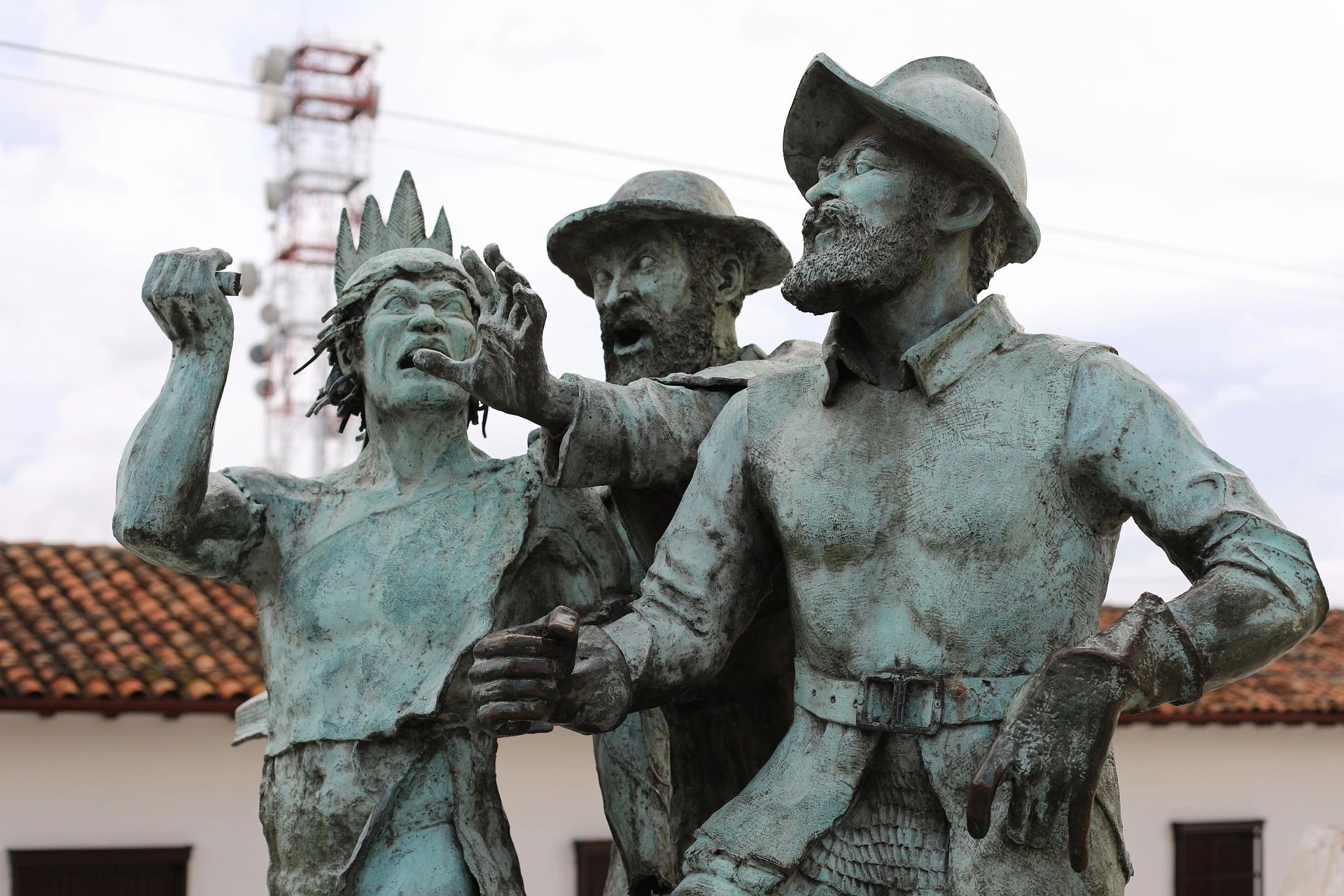
Church planting, without understanding and valuing the culture that you’re inhabiting, is colonization. It is imperialism. It is what rich countries do to exploit the resources of poor countries that cannot defend themselves. It is what France and Belgium did to African countries like Rwanda and Burundi that led to tribes turning against each other in acts of genocide.
Earlier this year, the UK’s Prince William and Princess Kate led a royal tour of Caribbean countries that had been colonized decades ago and forced into servitude to the British monarchy. Billed as a goodwill tour, it did not go well for the prince and princess. The Washington Post declared that “William and Kate’s royal tour put the offensive in charm offensive.”
“As the tour continued, communities demanded reparations and an apology for slavery. Press coverage described the trip as a ‘charm offensive’ that was mostly offensive as cringeworthy photos seemed to highlight racial disparities rather than harmony. William’s speech expressing ‘profound sorrow’ about slavery was called ‘tone deaf” and ‘unacceptable’ by Jamaican protesters. Efforts to remove the British Crown as head of state in these countries, as Barbados did last year, took on greater urgency.” (Keller)
Have we learned nothing from our mistakes in America with the Native Americans? Do we really want to do this again? Are Christians going to stake their claim to their territory in the Metaverse and push everyone else out? Will it end up in the Metaverse as it did in America, where those who were here before us were eventually relegated to reservations?
They Are My People
To reach Native Americans in the 1700s, David Brainerd lived among them. He became one of them. He was able to overcome feelings of deep mistrust that many Native Americans felt towards people of Brainerd’s race by laying down his life in service to them, gradually gaining their acceptance. When their territory was threatened, Brainerd worked to secure land for them. He helped build a school for their children, a carpenter’s shop, and an infirmary, as well as a church.
He loved the Native Americans so much that after spending a few days among some white settlers, he gladly returned to his life among the Native Americans, writing that “it is so good to be back amongst my own people again.” He actually identified *more *with the people he set out to reach than with people of his own original race and culture!
It’s not surprising that after giving so much of himself to the Native American people, hundreds of them were persuaded to faith in Jesus Christ.
Brainerd’s ministry is a model for us all. In order to reach people with the love of Jesus, we must be willing to invest time and effort to really understand them. We must value and respect people groups as they are without trying to force our beliefs and values on them. That does not mean that we approve of their sinful activities. It just means that we love them unconditionally, as God loves us.
Amy Carmichael was so dedicated to reaching the people of India that she adopted the Indian culture as her own in every way that she could without sinning. She disciplined herself to learn the Tamil language. She studied the Hindu culture and caste system. She wore the traditional sari, and even dyed her skin with tea bags and coffee!
Through her ministry, the Dohnaveur Fellowship was founded, which became a sanctuary for many of the abused and the outcasts of Indian society. Young girls who had been sold as temple prostitutes escaped lives of slavery and were given new lives of freedom as servants of Jesus Christ.
When Amy died, the girls to whom she had devoted her life placed a simple bird bath upon her grave site, engraved with the single word, “Amma,” the Tamil word for mother. There could be no higher honor from those she loved so much.
Hudson Taylor, founder of the China Inland Mission saw a dramatic increase in the favor he received to minister among the people of China after he purposely immersed himself in the Chinese culture. Some people were very suspicious of him initially, calling him “black devil,” as he moved among them in his Western attire. Realizing that his appearance was hindering his ministry, he ditched his Western clothes and adopted the Chinese manner of appearance, wearing Chinese clothing and adopting a Chinese hairstyle, shaving off the edges of his hair and wearing a pony tail, as was the style in 1800s China. After immersing himself in the Chinese lifestyle, his ministry was welcomed by many more Chinese people.
In order to effectively reach the Chinese people, Husdon Taylor *became *Chinese as much as he could. He completely laid his life down in order to reach the people of China with the good news of Jesus Christ.
He had this to say to those who expressed initial interest in joining him in the work of the China Inland Mission:
“If you want hard work and little appreciation; if you value God’s approval more than you fear man’s disapprobation; if you are prepared to take joyfully the spoiling of your goods and seal your testimony, if need be, with your blood; if you can pity and love the poor Chinese in all their mental and moral degradation, as well as literal filth and impurity, you may count on a harvest of souls now and a crown of glory hereafter ‘that fadeth not away’ and on the Master’s ‘well done.’ If, after prayerfully considering the matter, you still feel drawn to engage in such work, I shall be only too glad to hear from you again.” (Williamson)
Jesus often taught in synagogues, among religious people, but he lived among the common people, the sinners, the outcasts, the rejected, the hurting. He took time to speak with the woman at the well, even though it was not culturally acceptable for Jews to do that. Jesus was very approachable, even for lepers.
Jesus took up the causes of the hopeless, like the woman who was caught in adultery in John 8. He wept with those who wept, as He did with Lazarus’ family in John 11:35.
After speaking in religious meetings, Jesus didn’t isolate Himself in the “green room” with the other spiritual leaders. He ate with the common people, even people with scandalous reputations … and He was criticized for it!
“When Jesus came to that place, he looked up and saw Zacchaeus in the tree. He said to him, ‘Zacchaeus, hurry and come down! I must stay at your house today.’
“Zacchaeus came down quickly. He was pleased to have Jesus in his house.** **All the people saw this and began to complain, ‘Look at the kind of man Jesus stays with. Zacchaeus is a sinner!’”—Luke 19:5-7 (ICB)
“Later that day, Jesus and his followers ate at Levi’s house. There were also many tax collectors and others with bad reputations eating with them. (There were many of these people who followed Jesus.) When some teachers of the law who were Pharisees saw Jesus eating with such bad people, they asked his followers, ‘Why does he eat with tax collectors and sinners?’
“When Jesus heard this, he said to them, ‘It is the sick people who need a doctor, not those who are healthy. I did not come to invite good people. I came to invite sinners.’”—Mark 2:15-17 (ERV)
Jesus invested so much of Himself in the common people who became His disciples that He considered them to be His true family! He identified with them more than He identified with his natural brothers.
“While He was still talking to the multitudes, behold, His mother and brothers stood outside, seeking to speak with Him. Then one said to Him, ‘Look, Your mother and Your brothers are standing outside, seeking to speak with You.’
“But He answered and said to the one who told Him, ‘Who is My mother and who are My brothers?’ And He stretched out His hand toward His disciples and said, ‘Here are My mother and My brothers! For whoever does the will of My Father in heaven is My brother and sister and mother.’”—Matthew 12:46-50 (NKJV)
When Jesus sent His disciples out to minister, He did not send them into religious meetings. He sent them out into the cities to the common people. He sent His disciples to live among the poor, the oppressed, the hurting, and the hopeless.
“The Lord now chose seventy-two other disciples and sent them ahead in pairs to all the towns and places he planned to visit.”—Luke 10:1 (NLT)
Jesus directed his followers to open their doors of hospitality to the poor and the hurting.
“Then he told the man who had invited him, ‘When you give a luncheon or a dinner, stop inviting only your friends, brothers, relatives, or rich neighbors. Otherwise, they may invite you in return and you would be repaid.** Instead, when you give a banquet, make it your habit to invite the poor, the crippled, the lame, and the blind. **Then you will be blessed because they can’t repay you. And you will be repaid when the righteous are resurrected.’”—Luke 14:12-14 (ISV)
Phil Wyman, a hero of mine, received notoriety as a Christian minister for reaching out to people in the Neo-Pagan community of Salem, Massachusetts. It is well-deserved, but also sad in a way, that people considered his ministry remarkable when he was basically following Jesus’ example and doing what the majority of the Church has neglected to do.
In his book, Burning Religion, he writes, “The people who don’t matter are the people who matter to me. The lost, the outcast, the broken, the lonely, the doubting, the disenfranchised, the broken-hearted, the hopeless, the homeless, and those who feel homeless even though a roof is over their head — you are my people.” (Wyman, p.2)
References:
Bradfield, H. (2019, January 25). Amy Carmichael Biography. Inspirational Christians. Retrieved September 30, 2022, from https://www.inspirationalchristians.org/evangelists/amy-carmichael-biography/
Elliot, E. (2021, November 27). Amy Carmichael: Mother to the Motherless. YouTube. Retrieved September 30, 2022, from https://www.youtube.com/watch?v=D0jqeVolVFk&ab_channel=VisionVideo
Keller, K. (2022, March 31). Perspective | William and Kate’s Royal Tour put the offensive in charm offensive. The Washington Post. Retrieved September 26, 2022, from https://www.washingtonpost.com/outlook/2022/03/31/william-kates-royal-tour-put-offensive-charm-offensive/
Salem Web Network. (2010, April 28). David Brainerd. Christianity.com. Retrieved September 27, 2022, from https://www.christianity.com/church/church-history/timeline/1701-1800/david-brainerd-11630200.html
Staff, E.-W. (n.d.). Missionary Mindset: Hudson Taylor. East West. Retrieved October 1, 2022, from https://blog.eastwest.org/blog/missionary-mindset-hudson-taylor
Vision Video. (2020, November 9). David Brainerd: Missionary to the American Indians (2012): Full movie: Gary Wilkinson. YouTube. Retrieved September 27, 2022, from https://youtu.be/-SP58fpTyD0
Williamson, J. (2015, May 26). Hudson Taylor: Requirements for Missionaries. One Rock International. Retrieved October 1, 2022, from https://onerockinternational.com/hudson-taylor-requirements-for-missionaries/
Wyman, P. (2015). Burning Religion: Navigating the Impossible Space Between Religion and Secular Society.